e-Commerce
OVERVIEW
In a highly competitive home décor market, every cart drop-off represents a direct threat to revenue.
Maisons du Monde is a French home decor and furniture retailer with a strong online presence across Europe.
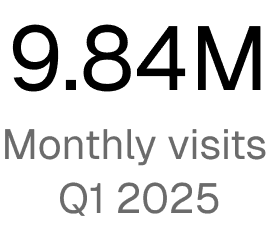
→ Overall website attracts 9.84M monthly visitors worldwide.
Spain is the third-largest market by traffic share.
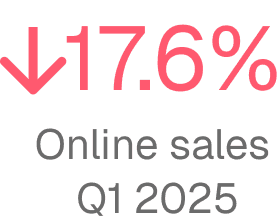
→ Despite high traffic, online sales declined by 17.6% since Q1 2025.
Analysis suggested that cart abandonment contributes to drop-off.
I led the end-to-end cart flow design process for a mobile MVP.
Using an iterative data-informed approach, aligning product clarity, cost-effectiveness, and scalability.


A scope focused on the cart level.
The highest-impact leverage point before starting the checkout process.
PROBLEM
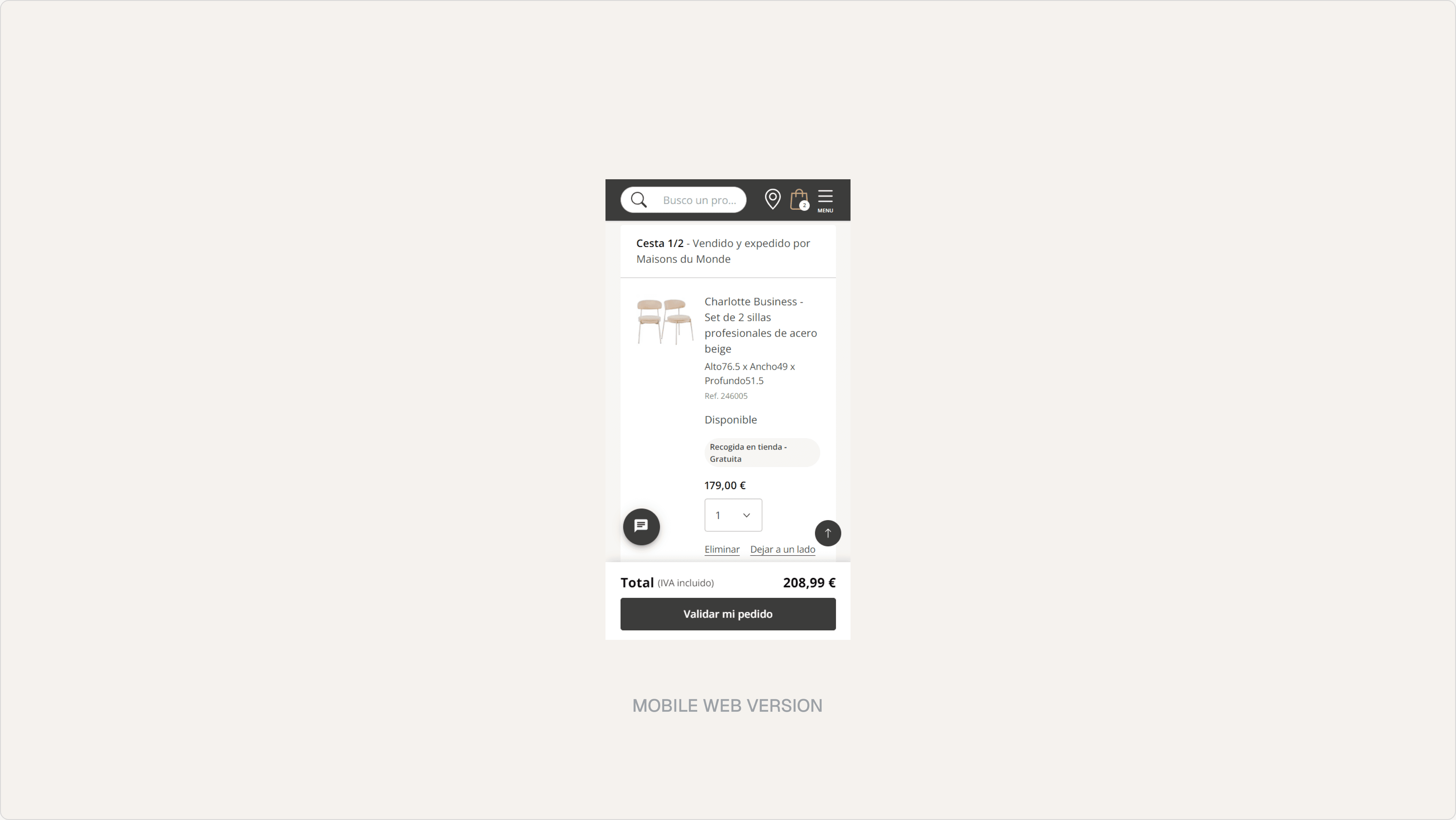
Delaying critical shipping information beyond the cart stage disrupts user confidence and sense of progress.
This forces users to enter a trial-and-error loop between cart and shipping
— interrupting momentum and increasing abandonment risk, especially in high-ticket purchases from mobile.
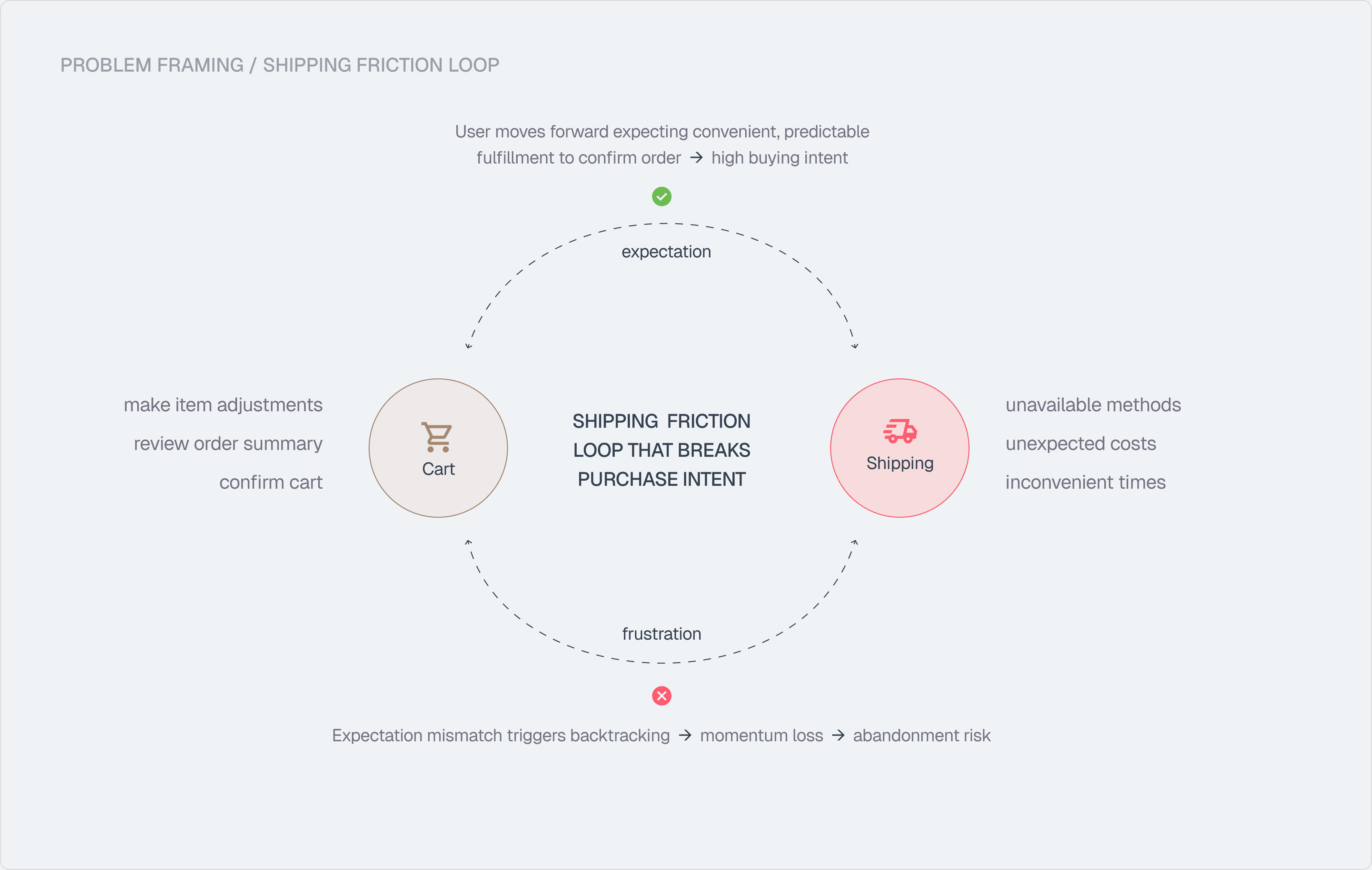
Key friction points.
→ Late delivery details.
Users see shipping methods, availability, timing, and costs only after reviewing the cart.
→ Trial-and-error loop.
Users must backtrack to the cart to adjust items or re-evaluate options.
→ Interrupted momentum.
Backtracking breaks sense of progress, increasing hesitation and abandonment risk.
→ High-ticket impact.
Delays in clarity at high-intent moments directly affect conversion.
PROBLEM
Delaying critical shipping information beyond the cart stage disrupts user confidence and sense of progress.
This forces users to enter a trial-and-error loop between cart and shipping
Key friction points.
→ Late delivery details.
Users see shipping methods, availability, timing, and costs only after reviewing the cart.
→ Trial-and-error loop.
Users must backtrack to the cart to adjust items or re-evaluate options.
→ Interrupted momentum.
Backtracking breaks sense of progress, increasing hesitation and abandonment risk.
→ High-ticket impact.
Delays in clarity at high-intent moments directly affect conversion.
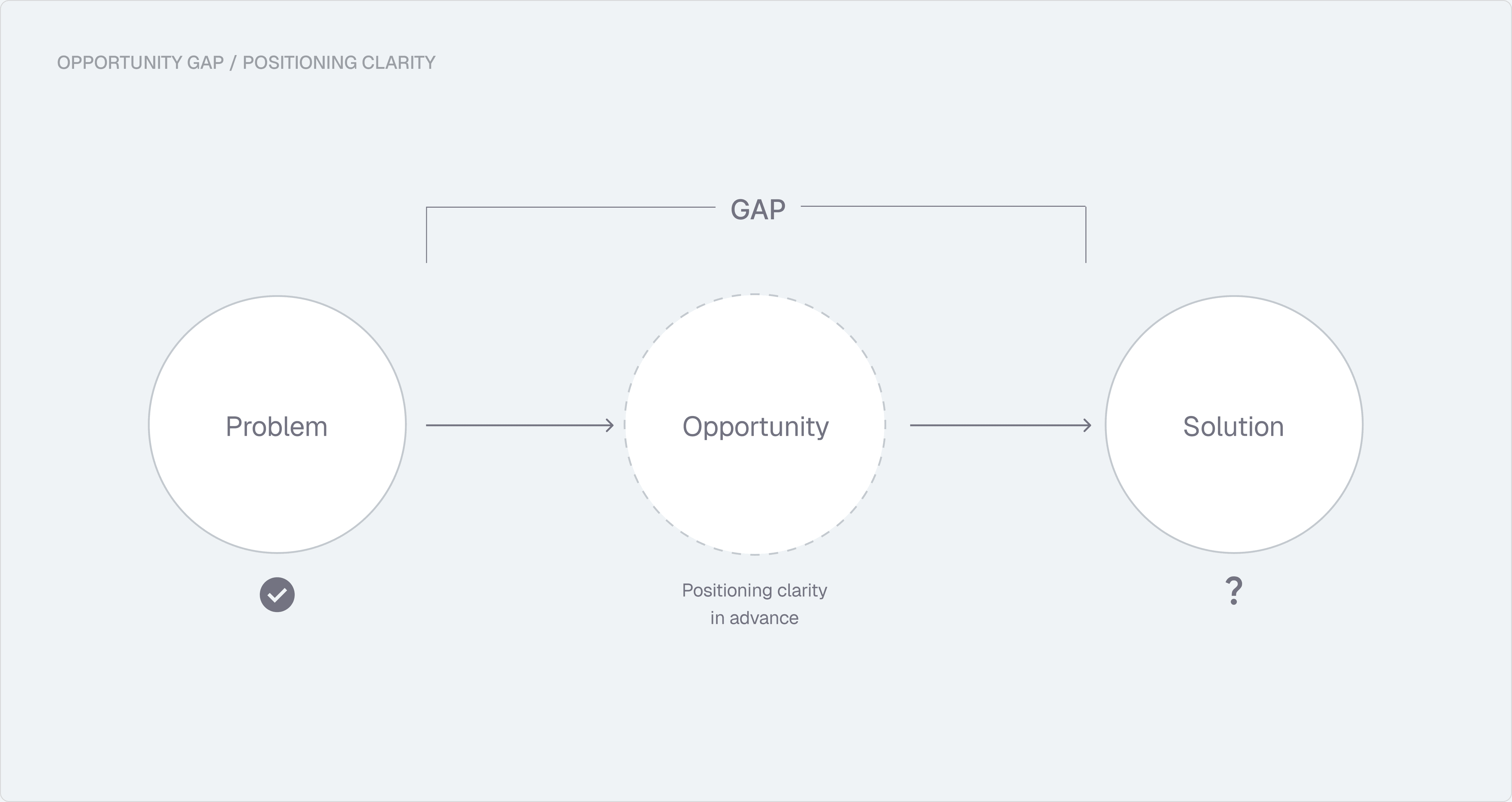
OPPORTUNITY
Positioning shipping clarity in advance, as the core value of the shopping cart, allowing users to make better-informed decisions before committing.
SOLUTION
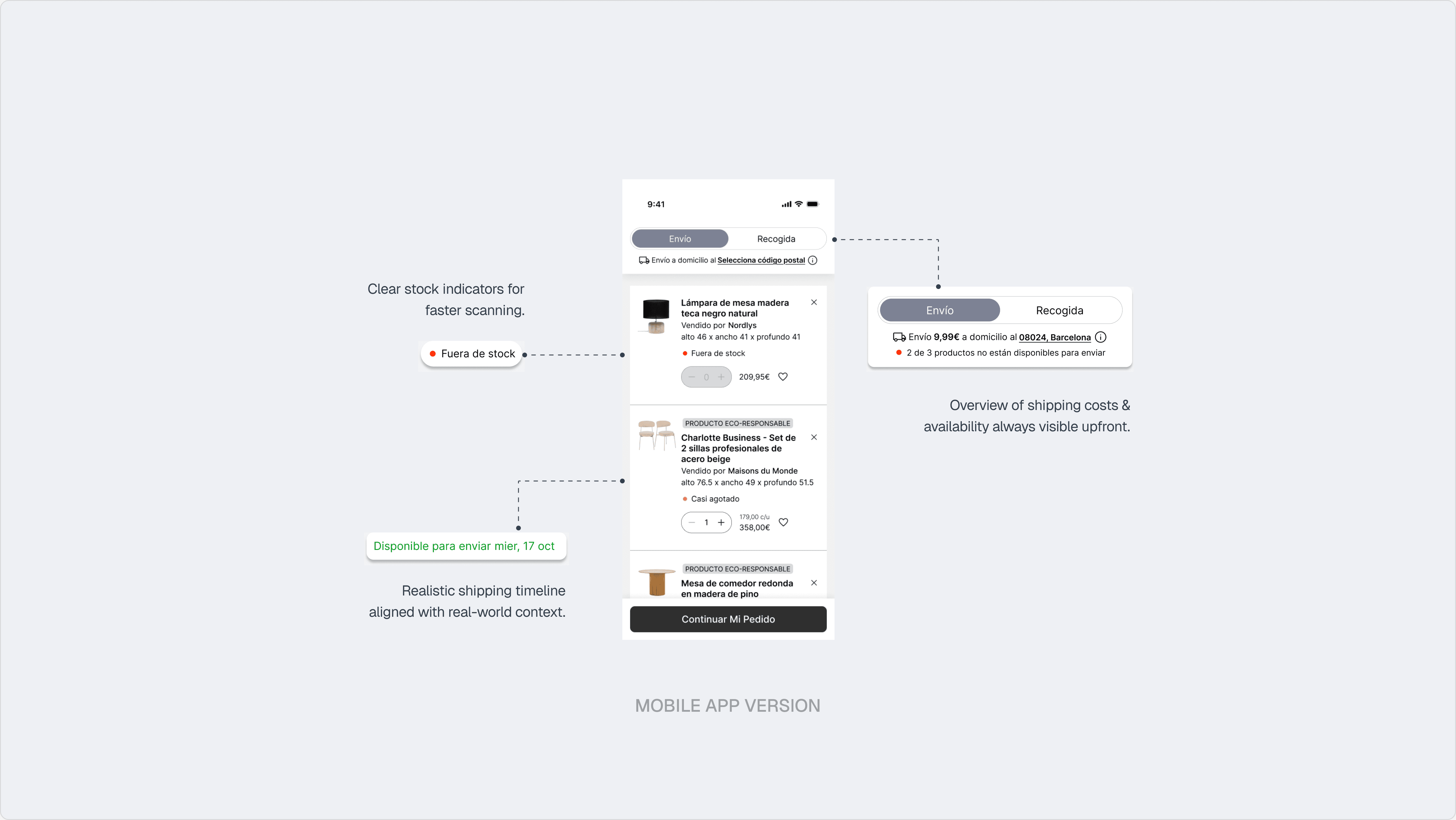
Allowing users to take immediate shipping-related control to confidently proceed to checkout without guesswork.
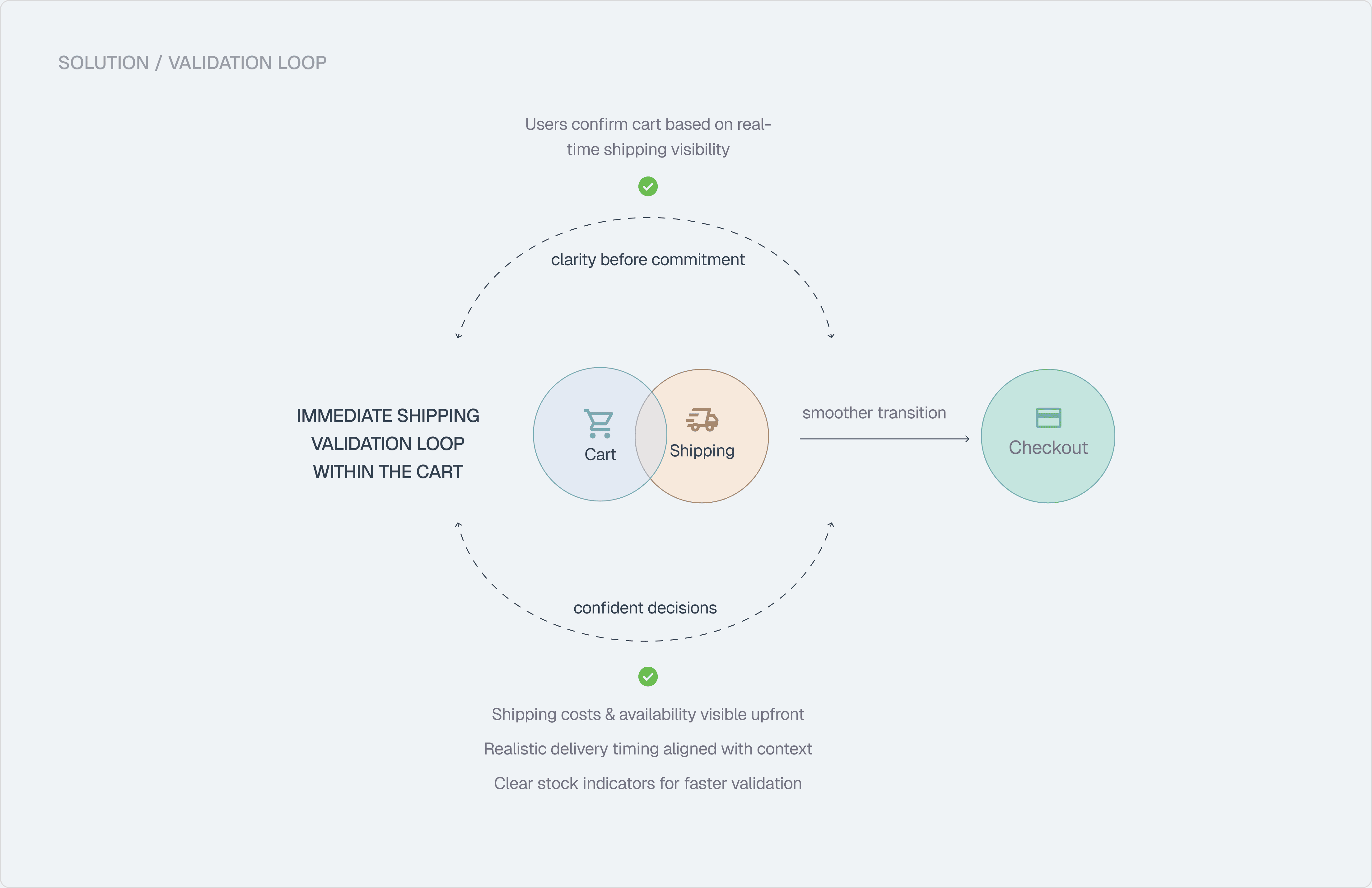
A user-centered solution where shipping validation is embed, not full fulfillment.
It was exposed only the decision-critical variables in-cart.
EARLY RESEARCH
From uncertainty to behavioral root.
To avoid solution bias, I sistematically expanded the problem space before narrowing into validated behavioral drivers.
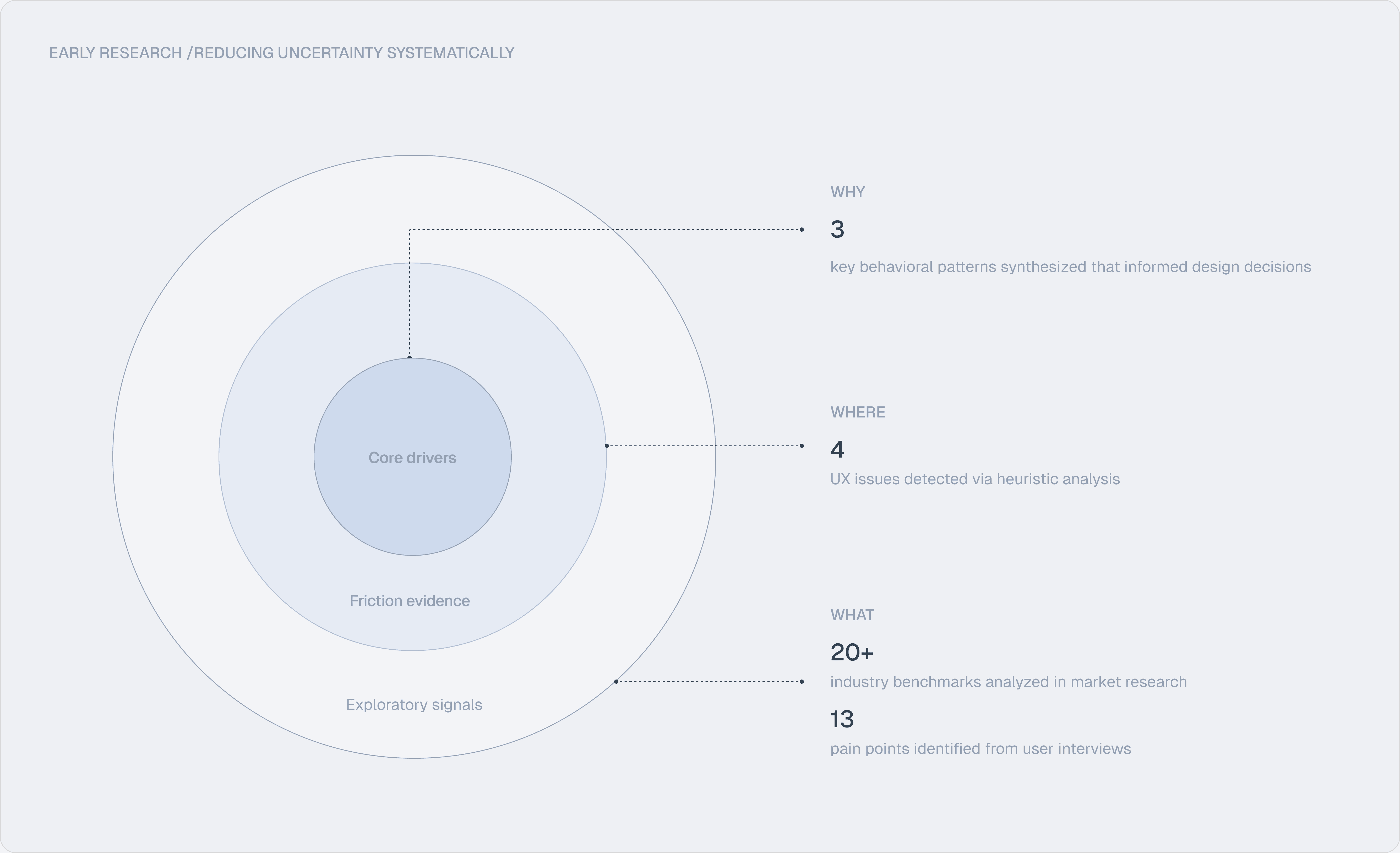
Exploratory signals — What patterns emerged.
Cross-industry benchmarks and early interviews revealed recurring tension around shipping clarity.
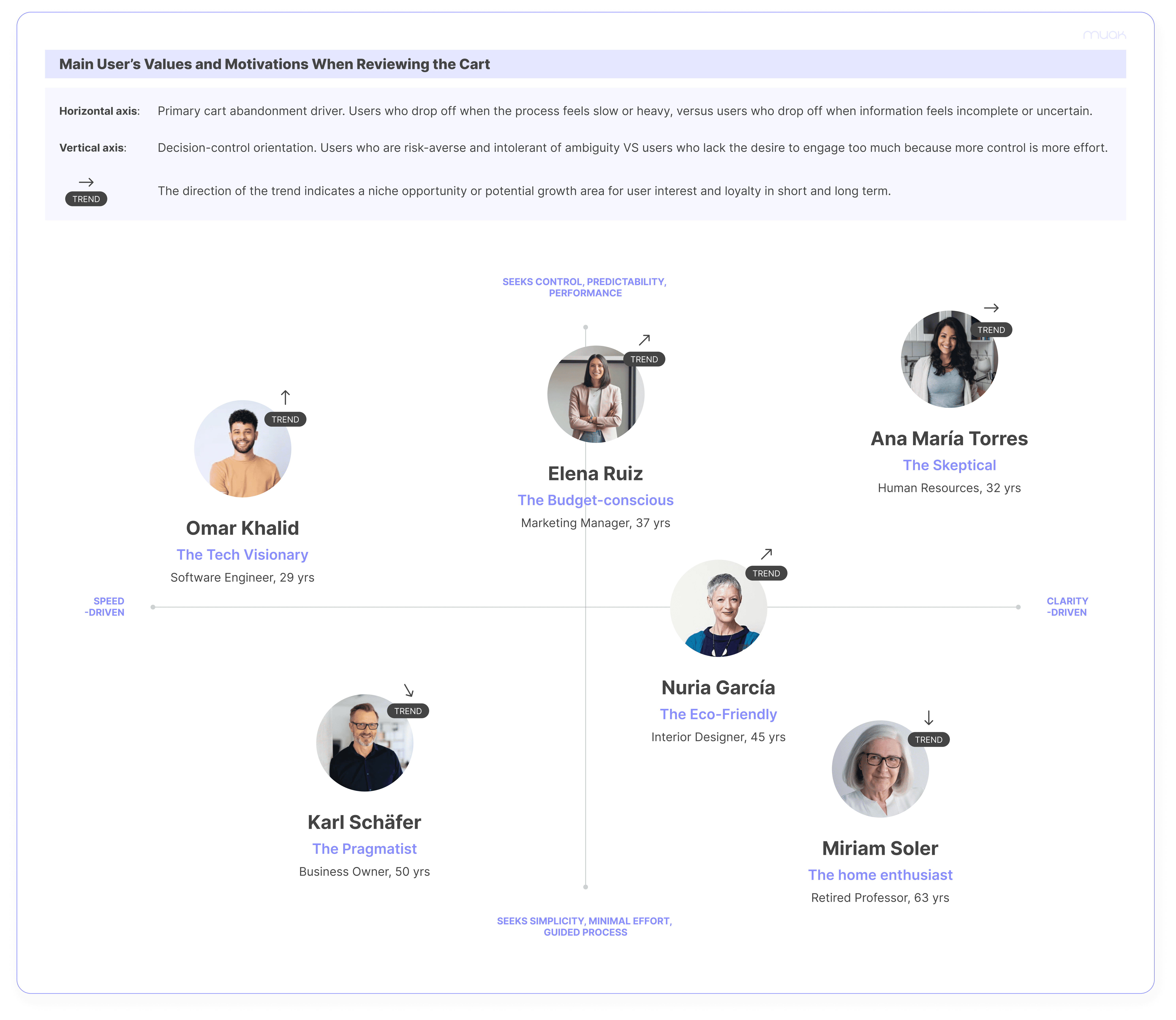
Main user insight.
However, tolerance toward uncertainty was not uniform.
Emerging behavioral archetypes revealed two intent profiles — where clarity was the dominant.
Clarity-driven users.
who seek cost certainty before commitment.
Speed-oriented users.
who prioritized momentum over detail.
Friction evidence — Where the experience breaks down.
A heuristic evaluation revealed a concentration of issues around delivery visibility and cost transparency at cart stage when.
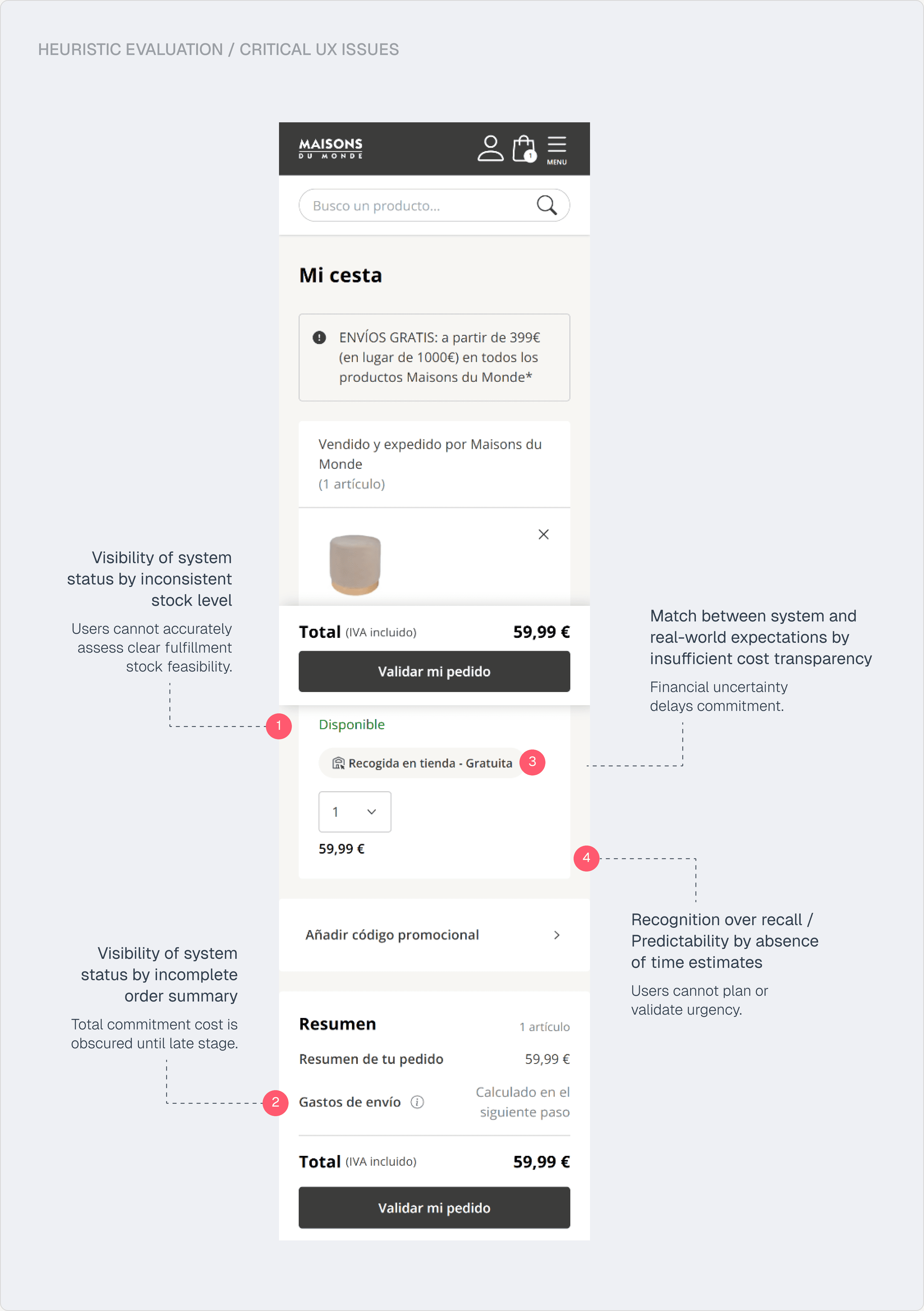
Inconsistent system status visibility.
Users cannot accurately assess fulfillment feasibility by unclear stock level.
Total commitment cost is obscured until late stage by incomplete order summary transparency.
Mismatch between system and real-world expectations.
Financial uncertainty delays commitment by insufficient cost transparency
Recognition over recall / Predictability.
Users cannot plan or validate urgency by absence of shipping time estimates.
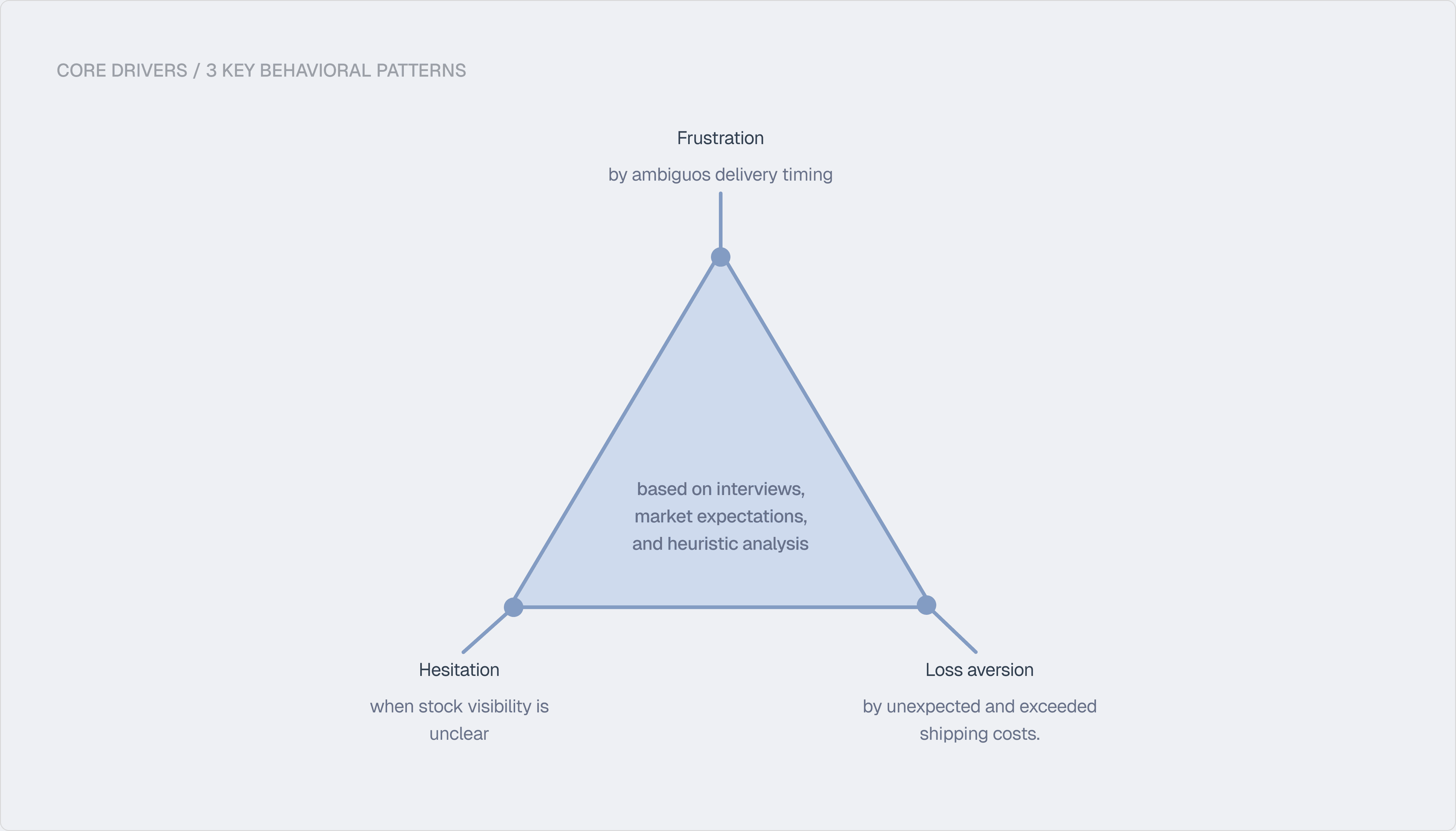
Core behavioral drivers — Why users abandon the cart
Commitment stalls when financial and logistical variables remain uncertain.
→ Frustration
triggered by ambiguous delivery timelines.
→ Hesitation
when stock visibility is unclear.
→ Loss aversion
by unexpected and exceeded shipping costs.
These 3 isolated behavioral patterns converged into the basis of the design decisions.
Hypothesis framed for validation.
Early insights guided a solution aimed at reducing uncertainty for clarity-driven users while preserving flow efficiency — without fragmenting the cart.
"If uncertainty at the cart stage drives hesitation,
then clarity at the decision moment becomes a conversion lever".
"If excessive information slows confident users,
then progressive disclosure protects momentum.
"If users enter the cart with different intent states,
then the experience must adapt in depth—without splitting flows".
DESIGN DECISIONS
I prioritized introducing shipping selection visible at the top of the cart.
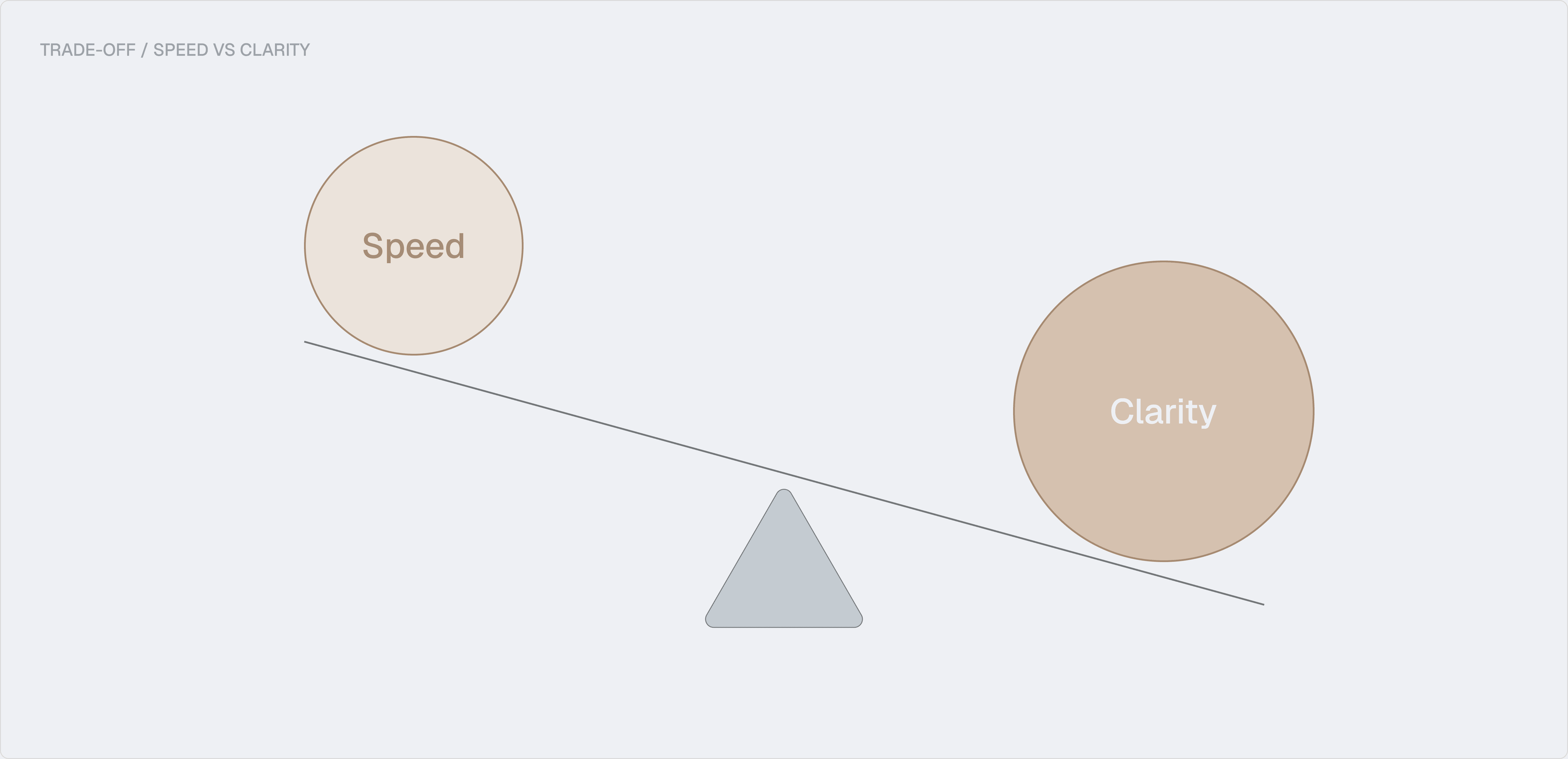
The deliberate trade-off favored clarity over raw speed — because at high intent, uncertainty costs more than an extra interaction.
Deconstructing the cart by user intent hierarchy.
The cart was reframed around user intent levels, anchoring the experience on the primary decision.
Primary intent — Commit
Confirm cost and delivery feasibility before committing.
This is the business-critical action the solution was designed to support.
Secondary intent — Adjust
Adjust quantity
Delete items
Save items in favorite list
Review order summary
Necessary as part of the process, but not the goal.
Tertiary intent — Explore
Continue shopping
Apply promotions
Optional, and potentially distracting.
Evaluating solution paths through a decision framework.
A structured decision tree filtered concepts against clarity impact, implementation risk, and behavioral alignment.
The chosen direction maximized clarity at peak intent with controlled implementation risk — preserving the cart as a commitment checkpoint rather than turning it into a configuration flow.
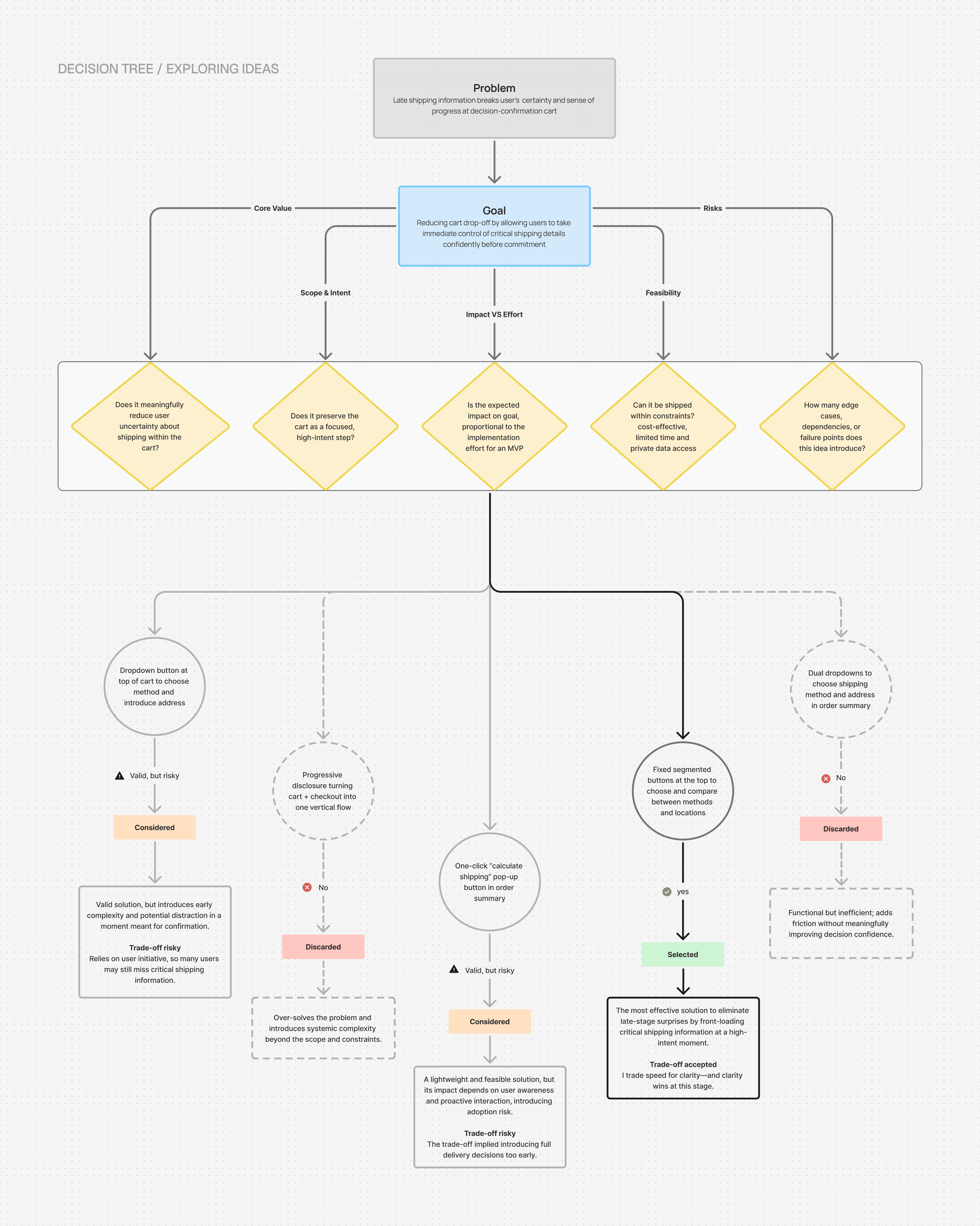
Why this solution: five evaluation criteria.
These criteria were used to compare all explored ideas and guided the final selection.
— Core user's value
Reduces shipping uncertainty before checkout commitment.
— Scope and intent
Supports decision-making without expanding the cart into a configuration flow.
— Business impact vs effort
Targets a high-impact friction point with limited UI and reused logic.
— Feasibility
Builds on existing shipping calculations without new private data dependencies.
— Risk management
Centralizes unavoidable complexity into a single, controllable interaction.
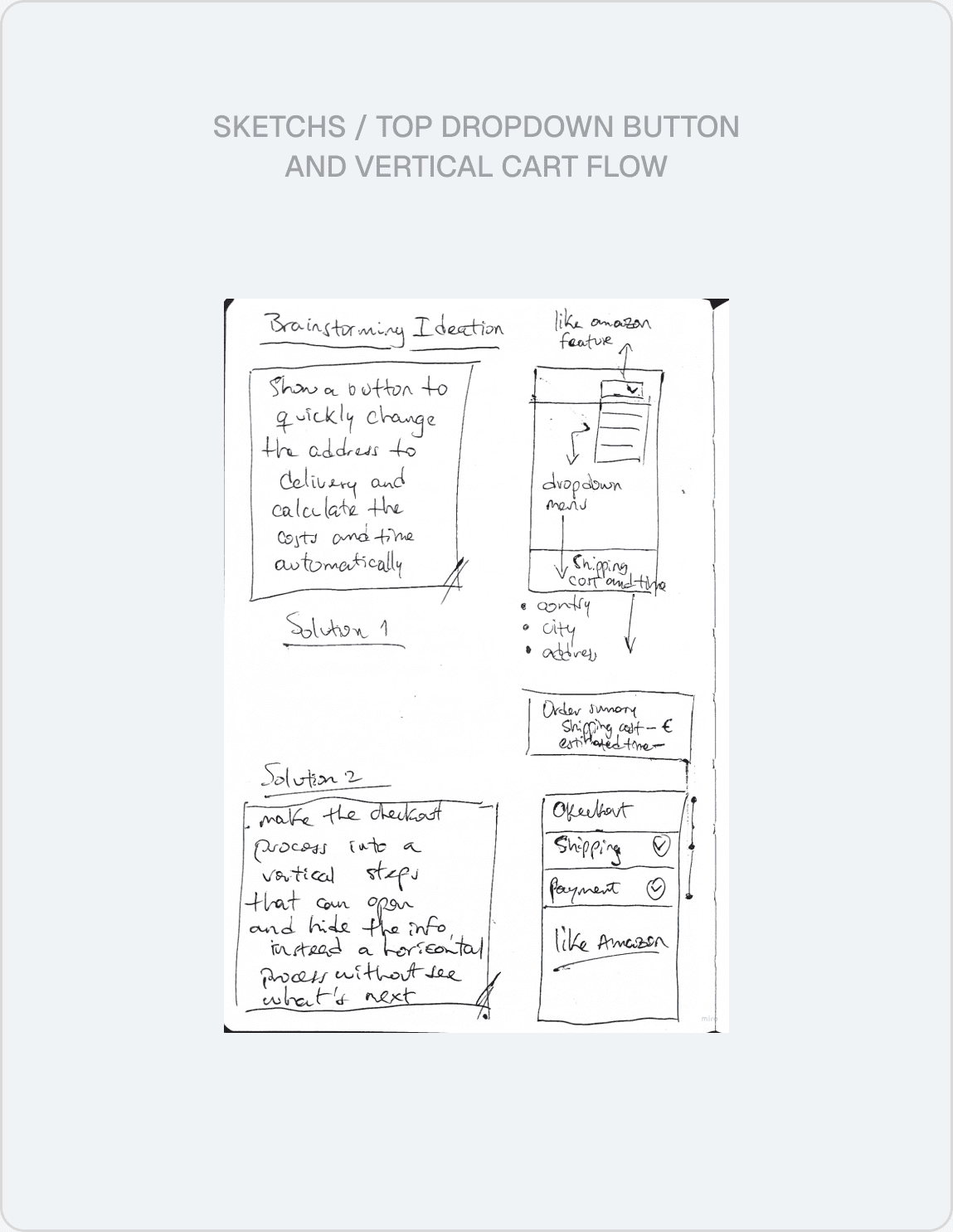
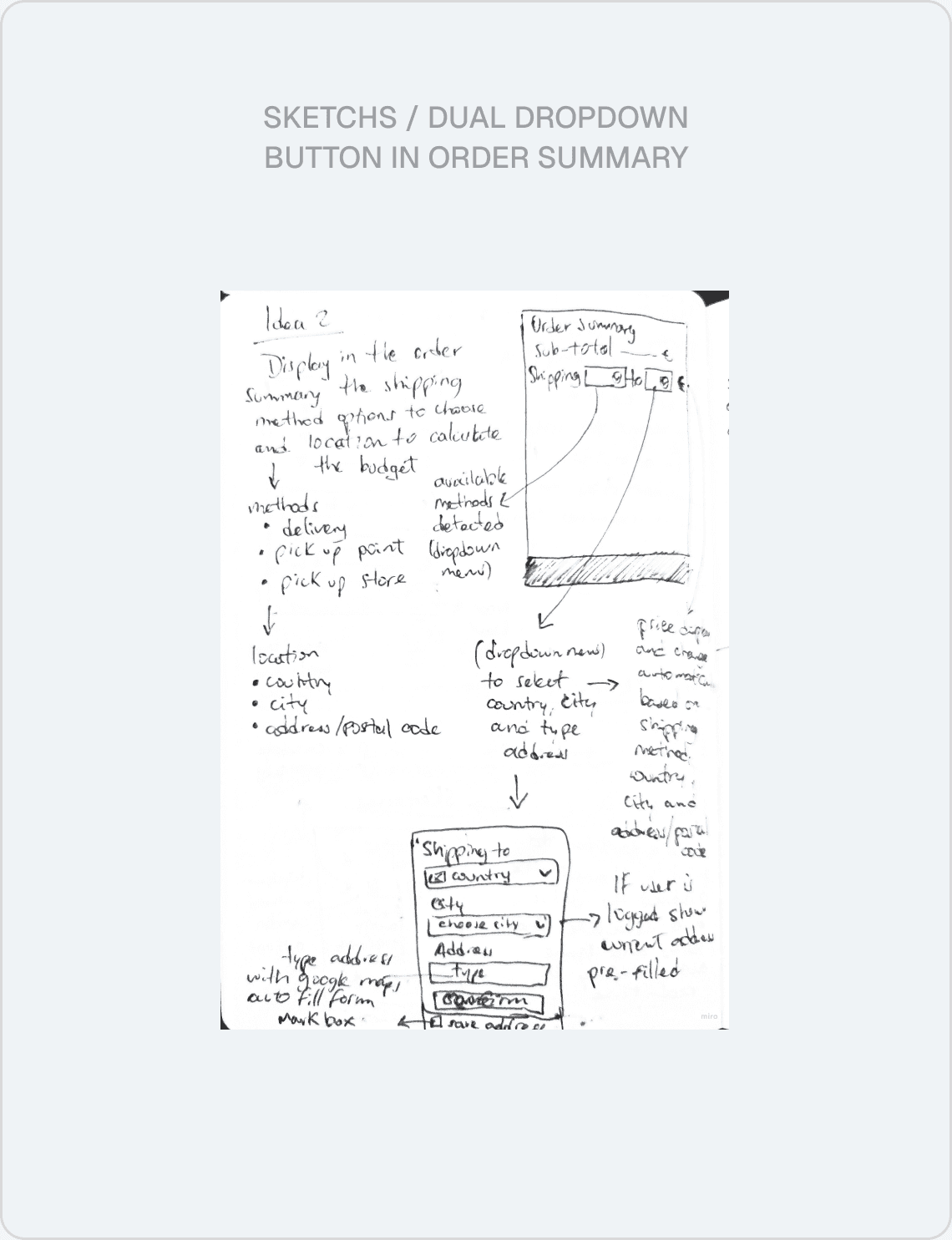
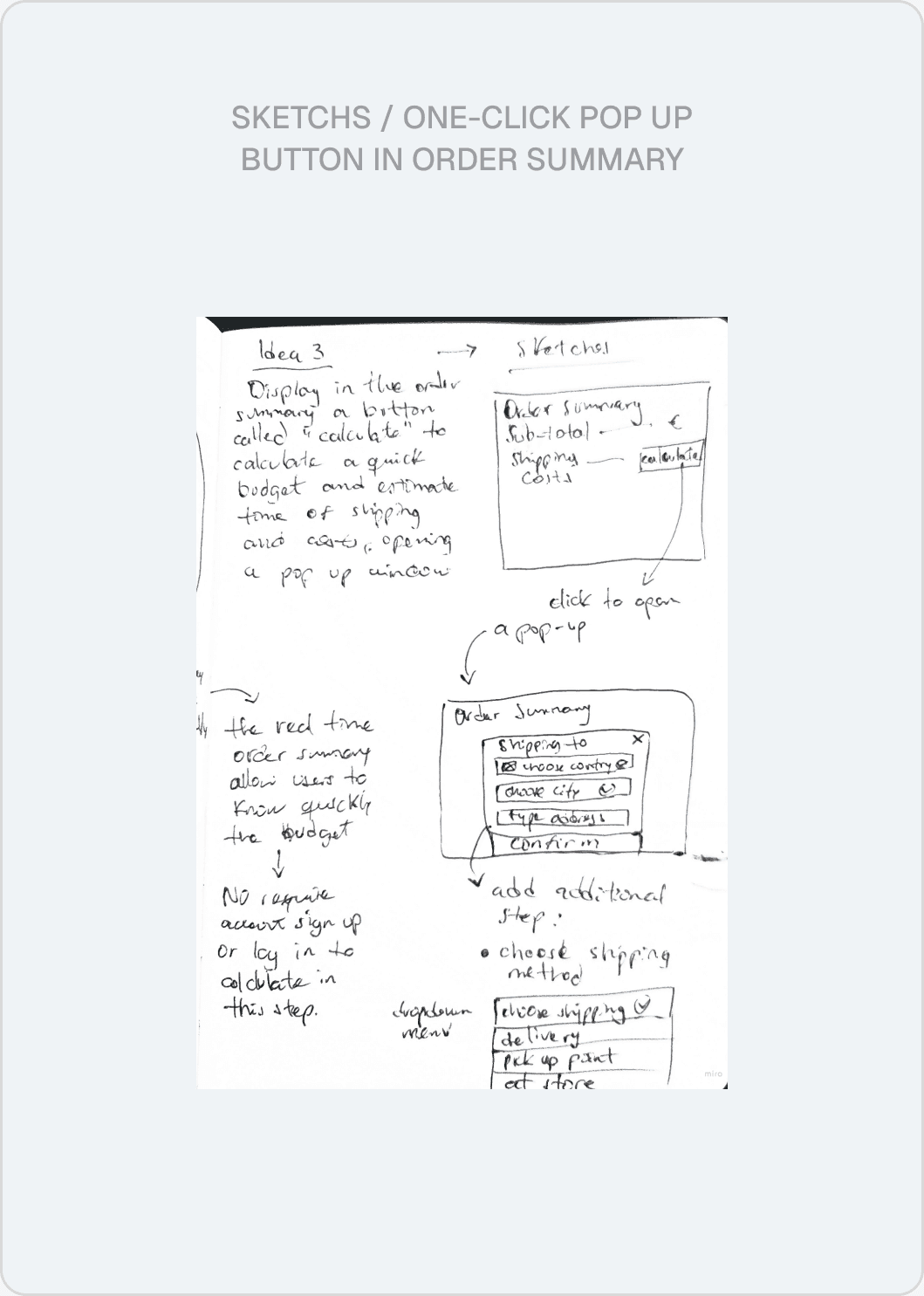
Some sketches and concepts during the brainstorming…
SCALABILITY
A system-first approach was designed to grow, adapt, and ship efficiently — not just look correct in one cart state.
Instead of relying on one-off UI elements, the design is grounded in reusable, system-level decision patterns that can support new delivery rules, markets, and constraints without redesigning the cart experience.
Main modular components in the cart.
Core interactions were defined by product capabilities rather than isolated UI components, allowing behavior and logic to scale independently from layout.
One shipping summary, multiple delivery realities.
(primary decision surface).
Grouping design elements by product capabilities, beyond UI components.
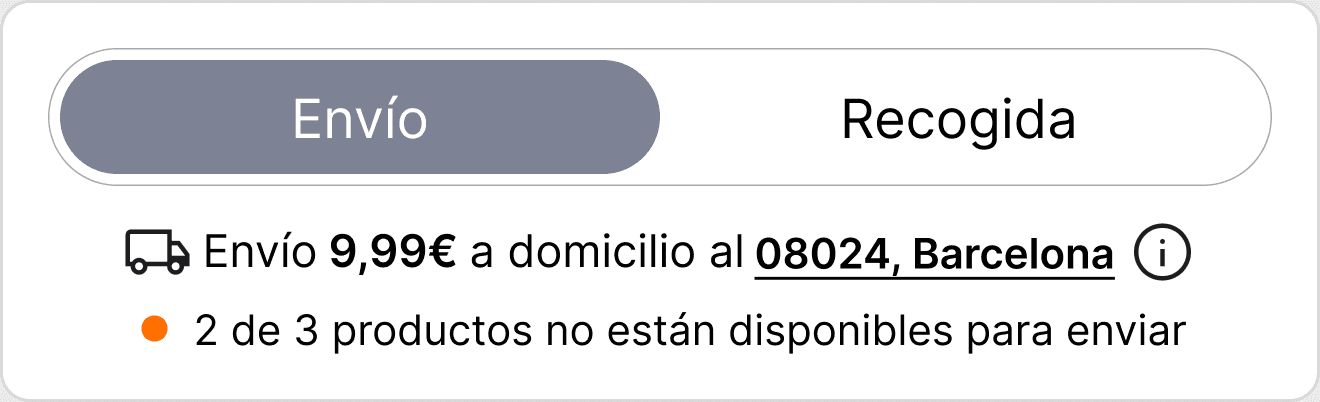
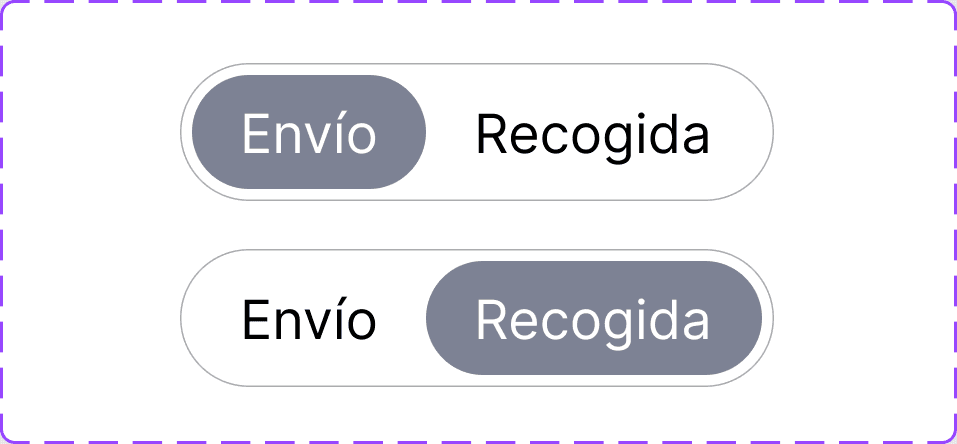

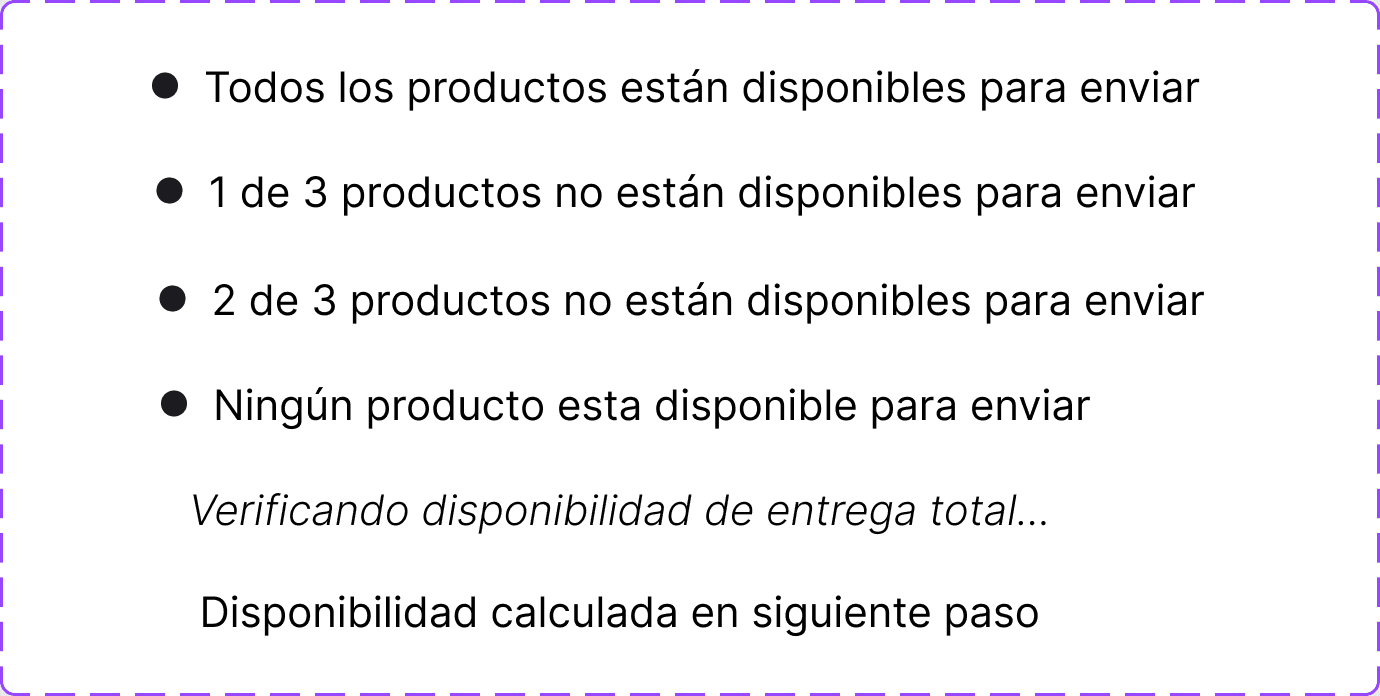
Together, these components allow shipping logic to evolve without fragmenting the cart or increasing drop-off risk. This structure allows shipping logic to scale without adding new steps, screens, or decision points in the cart.
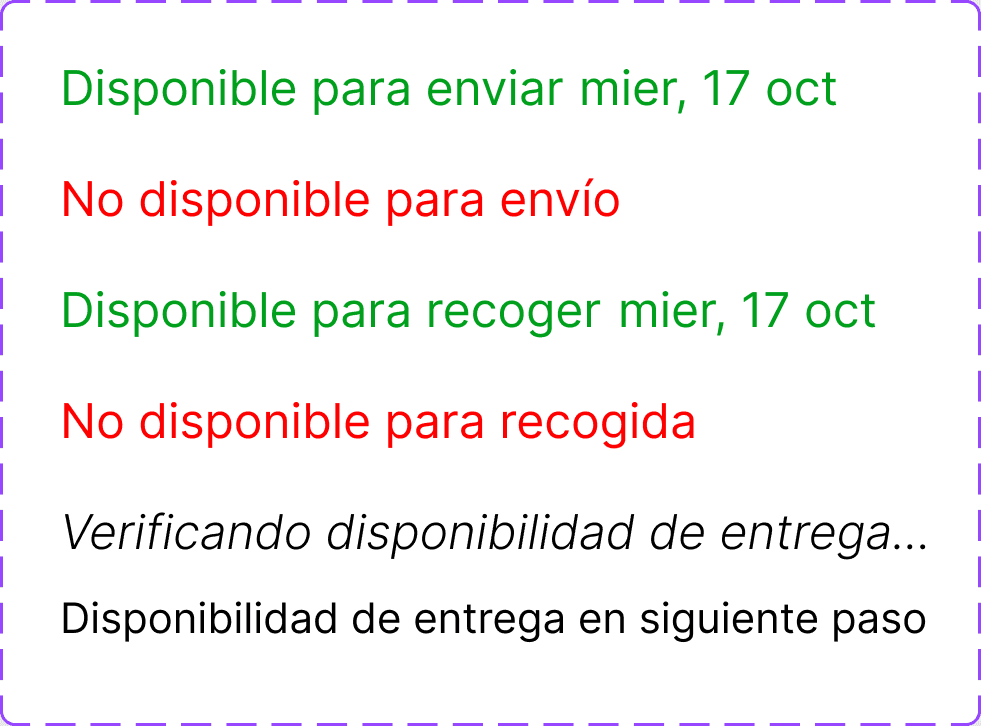
Delivery availability states without new flows.
(decision outcomes).
Delivery timelines and constraints evolve through states, not new screens or steps.

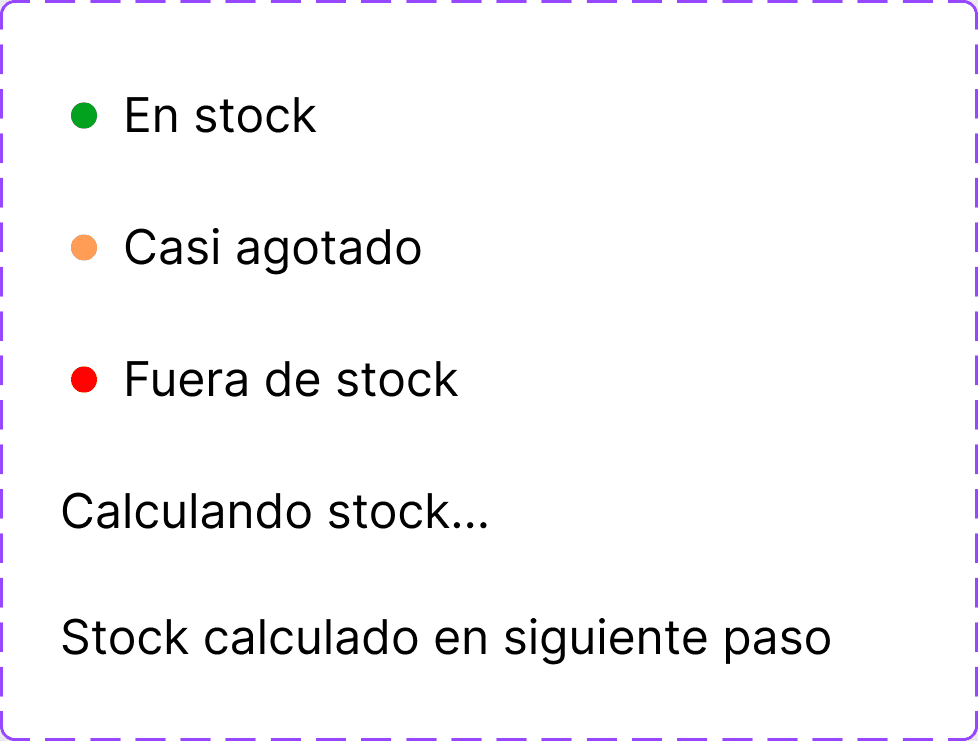
Stock visibility as a non-blocking system signal.
(supporting signal).
Stock status behaves as a system-level signal that adapts to availability rules without introducing new user decisions.

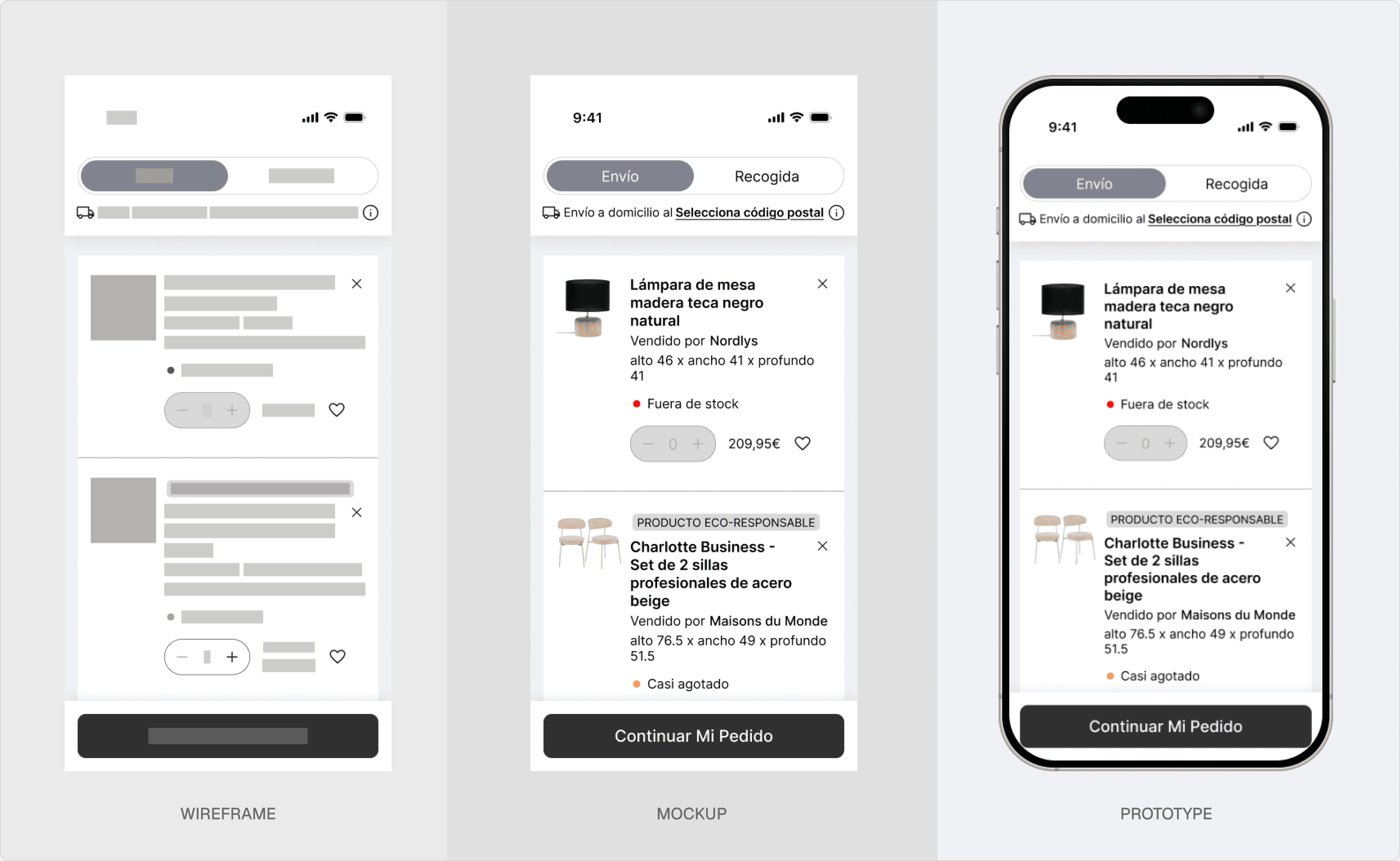
Prototype & Validate
From wireframes to interactive decision validation.
I built prototypes to validate how users discover, interpret and act on shipping cost, availability, and stock constraints directly in the cart — before committing to checkout.
The goal was not to test UI preference, but whether key decisions could be made confidently under real-world conditions.
Core decision flows.
Both flows treat shipping and pickup as dynamic system inputs — not fixed assumptions — allowing the cart to adapt to real-world constraints without adding friction, and enabling users to change and compare between most convenient shipping methods anytime without log in or sign up.
Flow 01.
Location-based delivery clarity at the moment it matters.
Delivery details are introduced only when users choose to provide their ZIP code—transforming uncertainty into precise cost and timing clarity without overloading early decision-making.
These flows are based on a 3-level clarity impact.
→ Top-level.
→ Item-level.
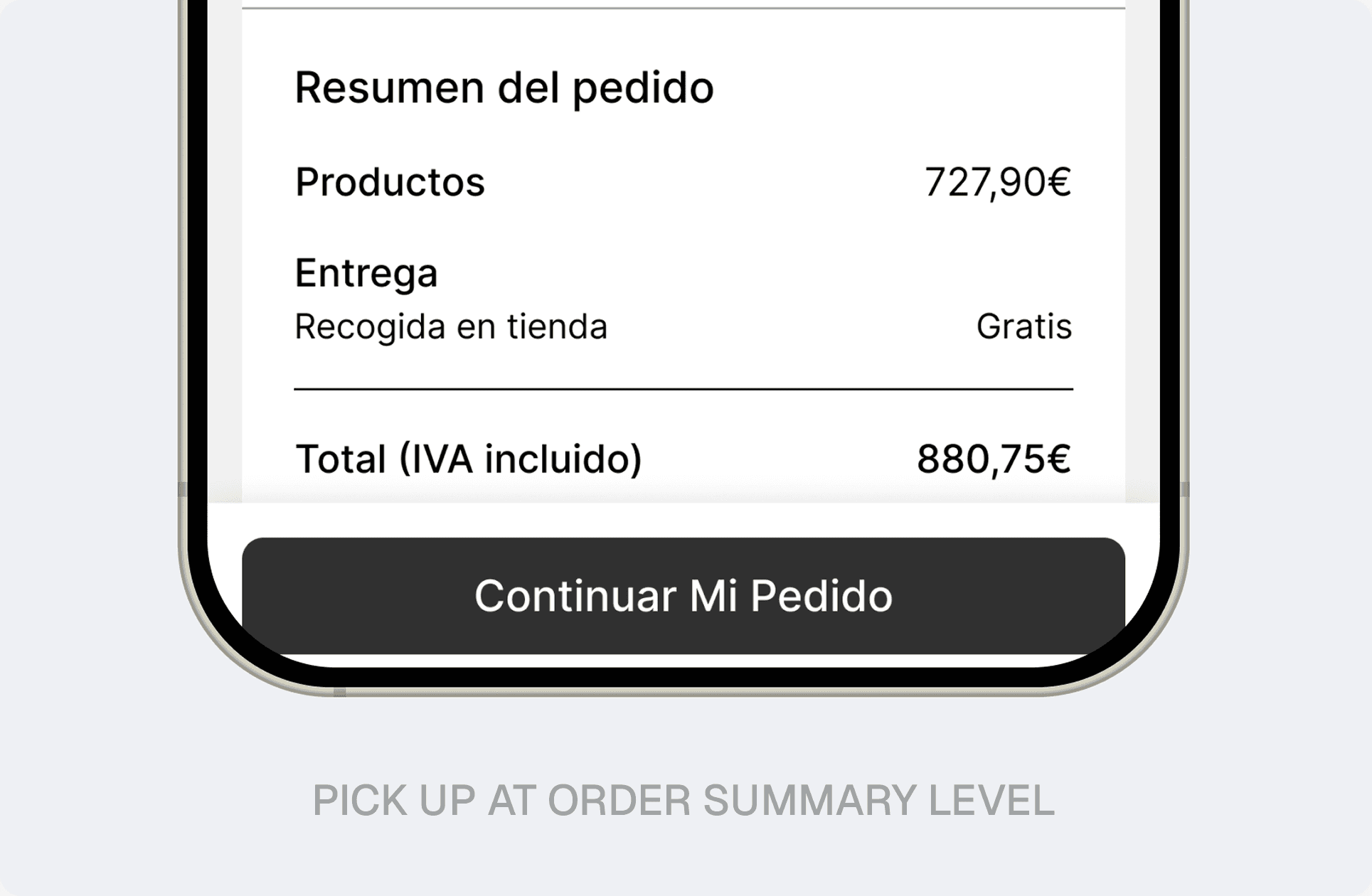
→ Order summary level.
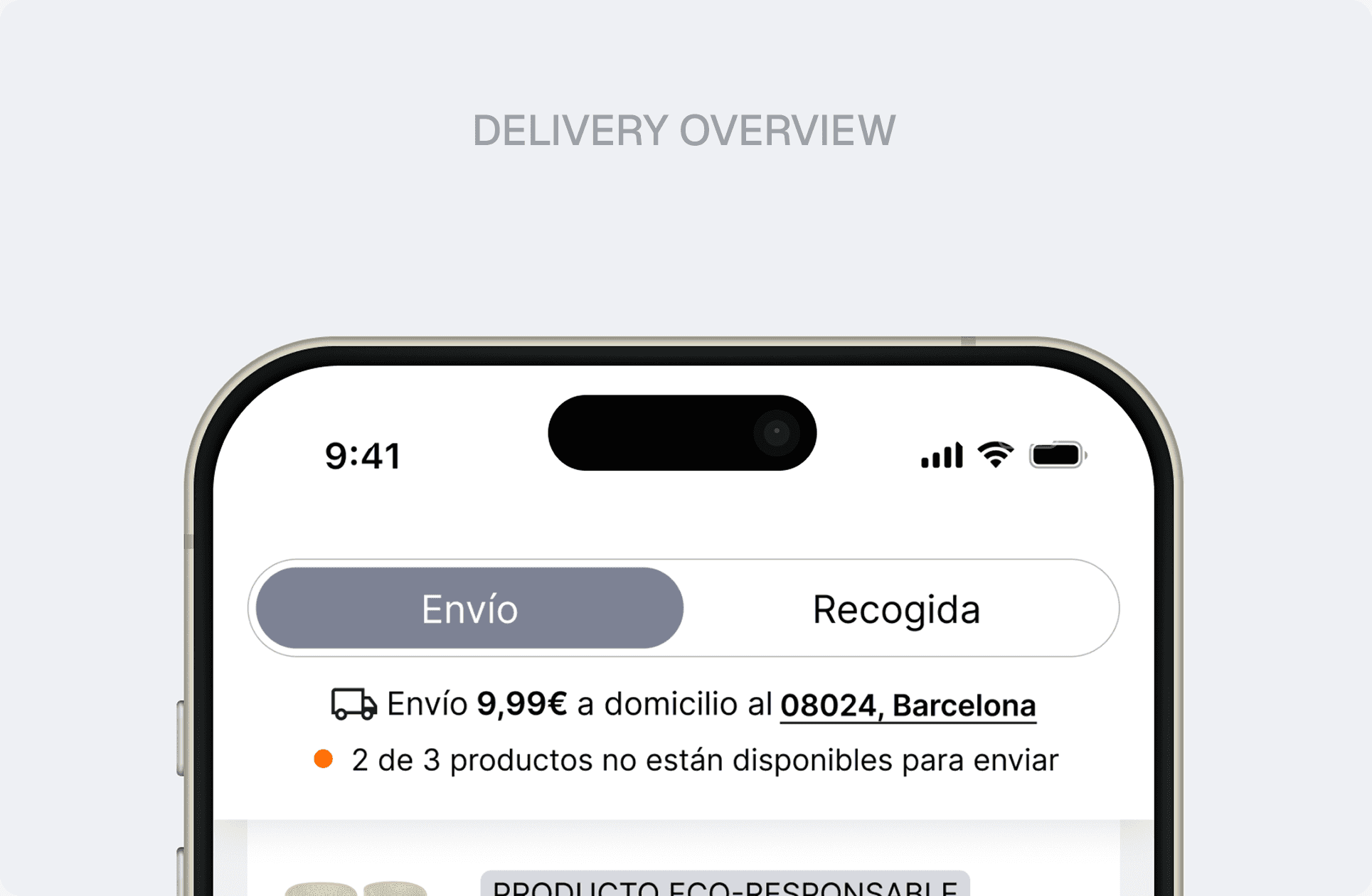
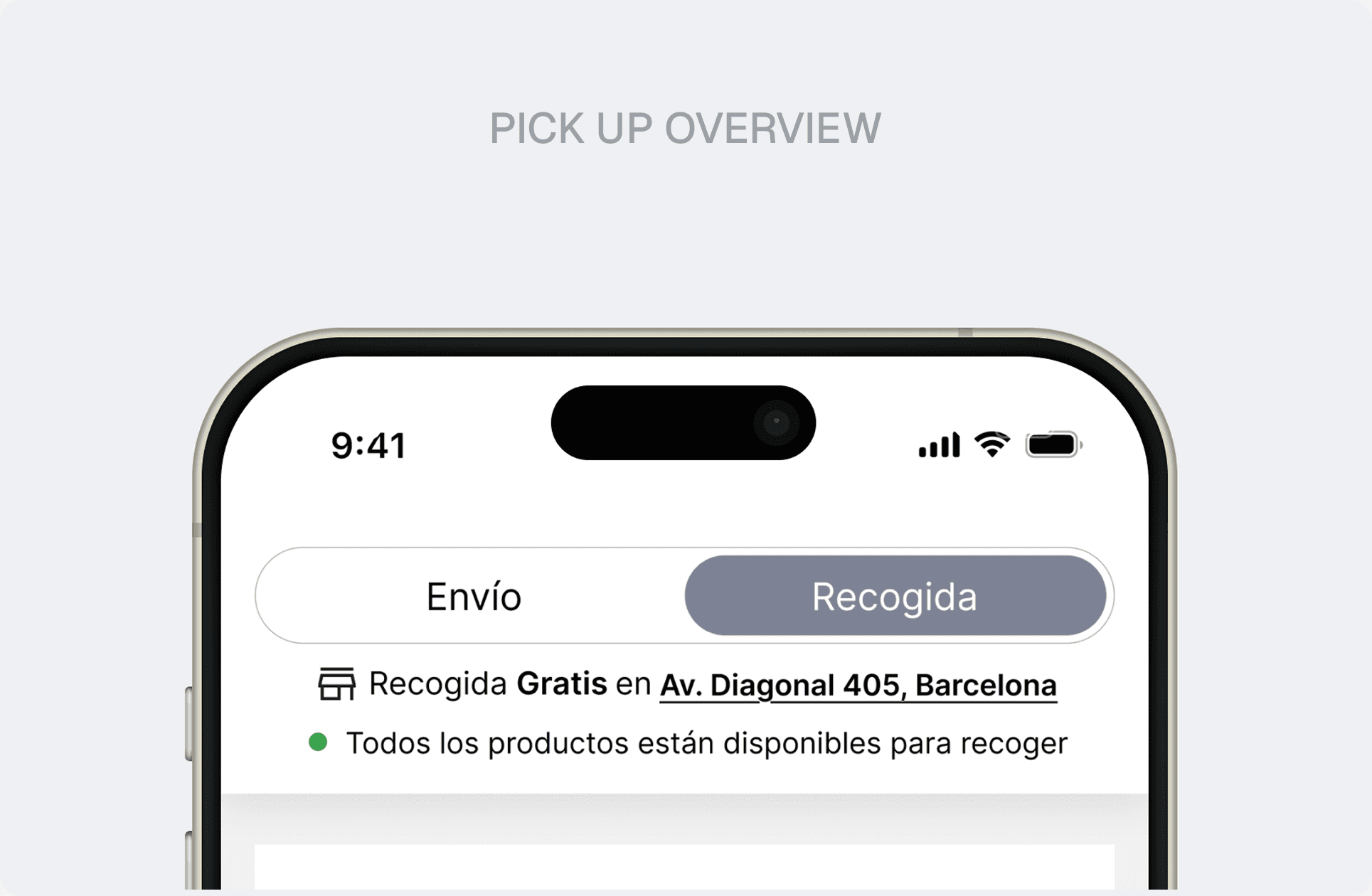
Top-level clarity.
Early fulfillment resolution surfaces a full fixed overview where financial and logistical information is always visible, preventing friction loops and enabling confident progression to checkout.
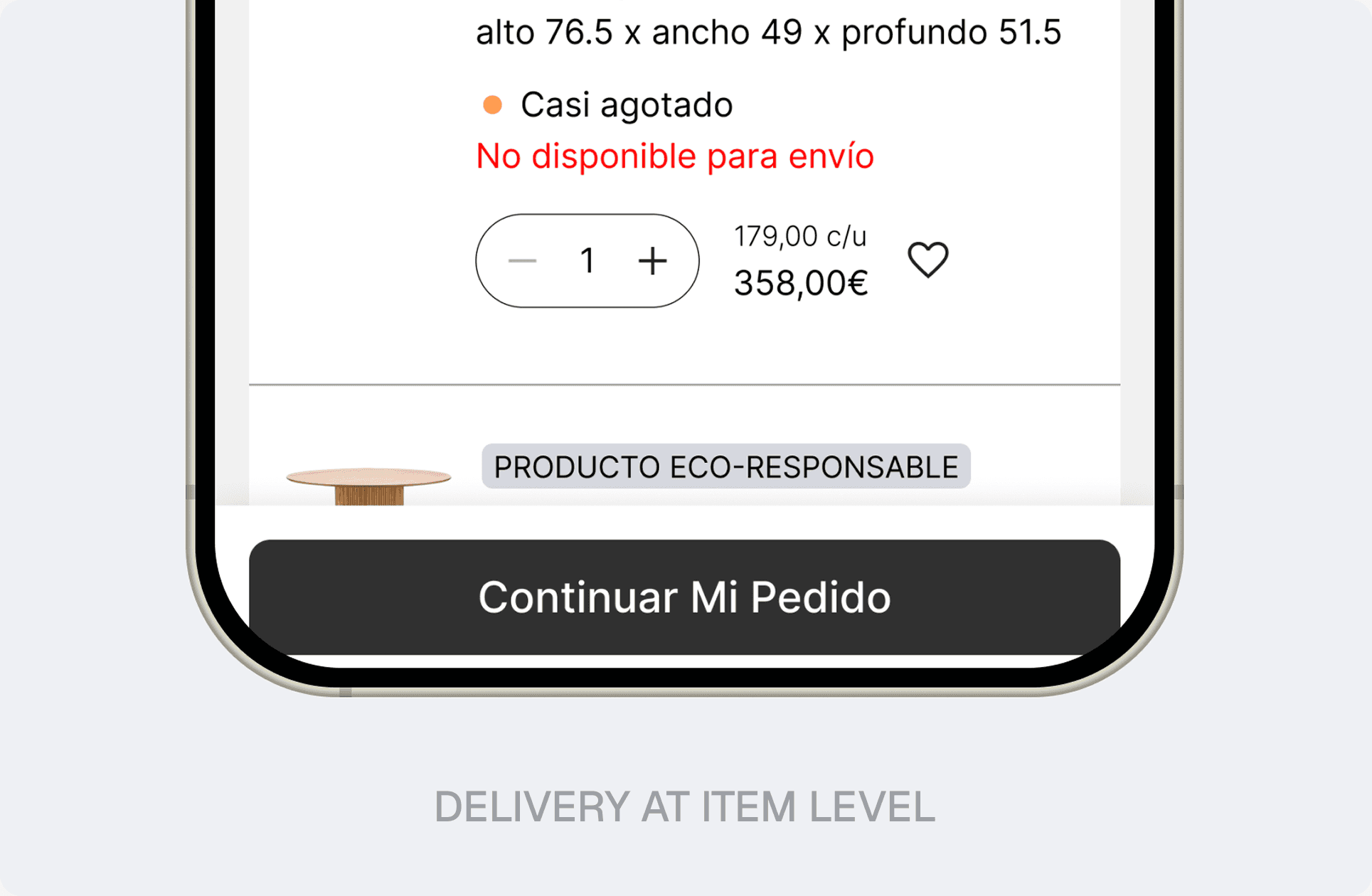
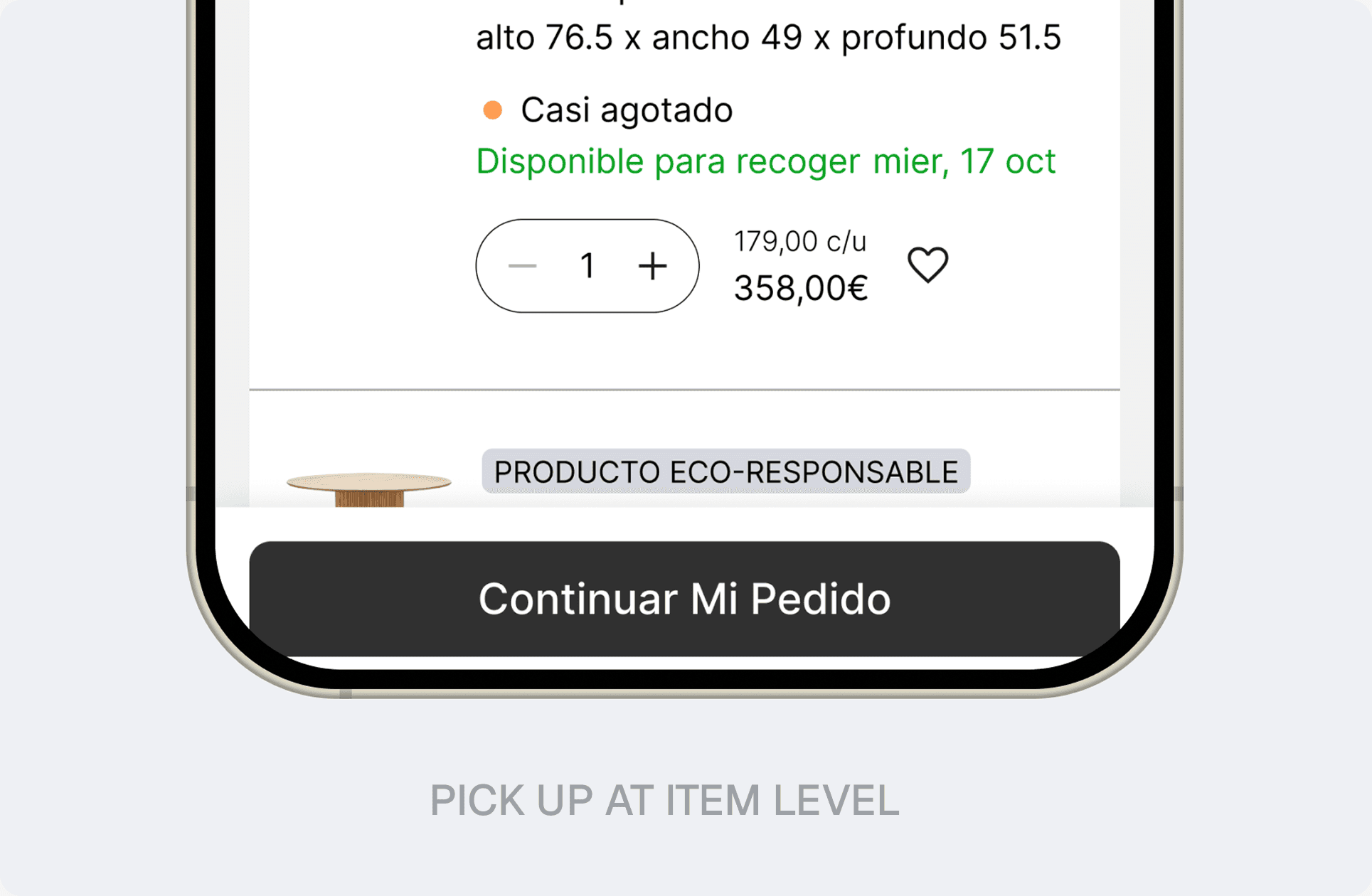
Item-level clarity.
By resolving availability and timing at the item level, users gain clarity before commitment—eliminating surprises during checkout.
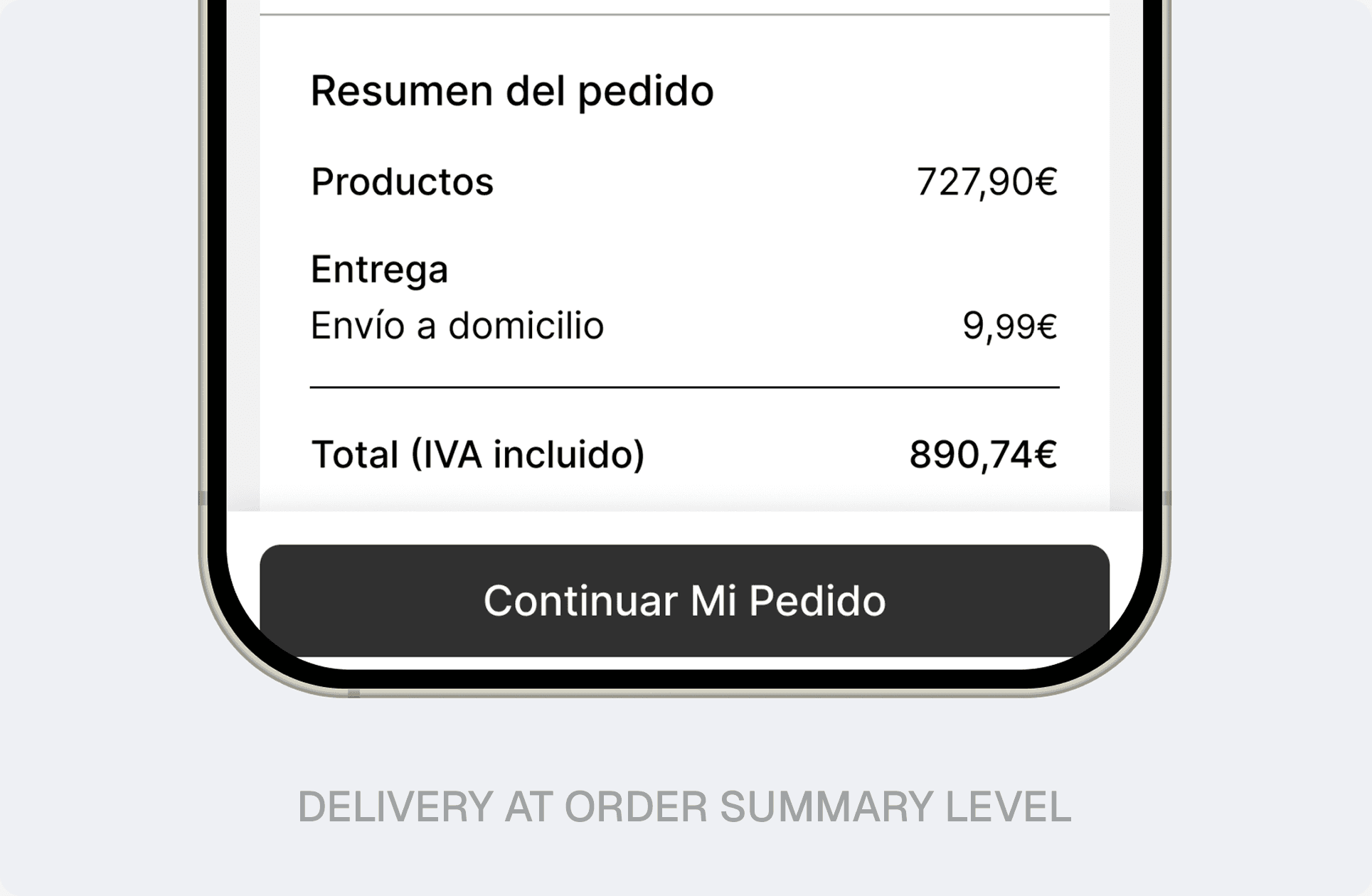
Order summary level clarity.
By aligning the final cart total with the shipping fulfillment context, the order summary eliminates cost ambiguity, supporting informed financial decisions before proceeding to checkout.
Clarity-building triggers.
Activation points that define fulfillment context and initiate clarity resolution across the cart.
→ ZIP code-based activation.
For immediate fulfillment clarity.
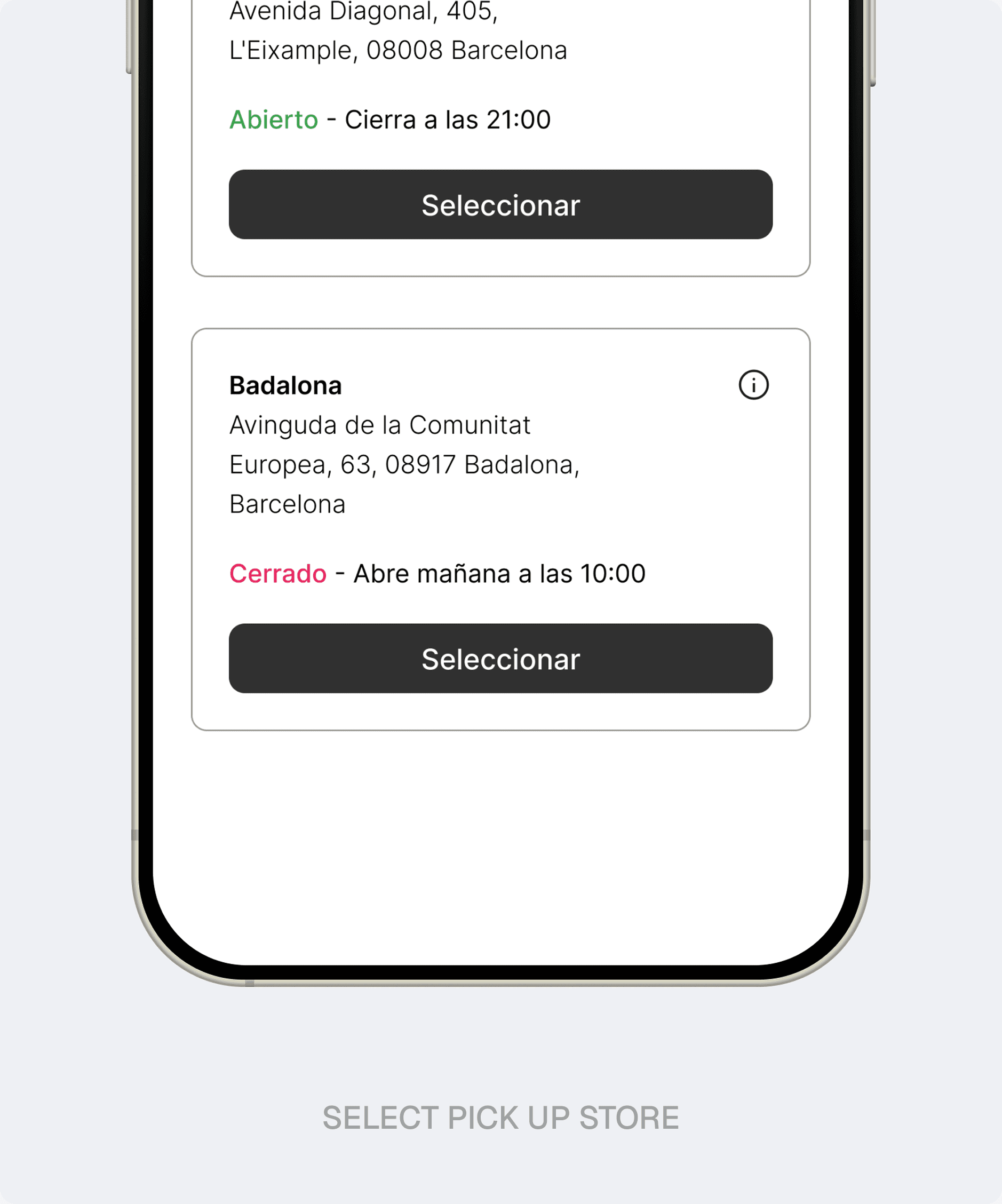
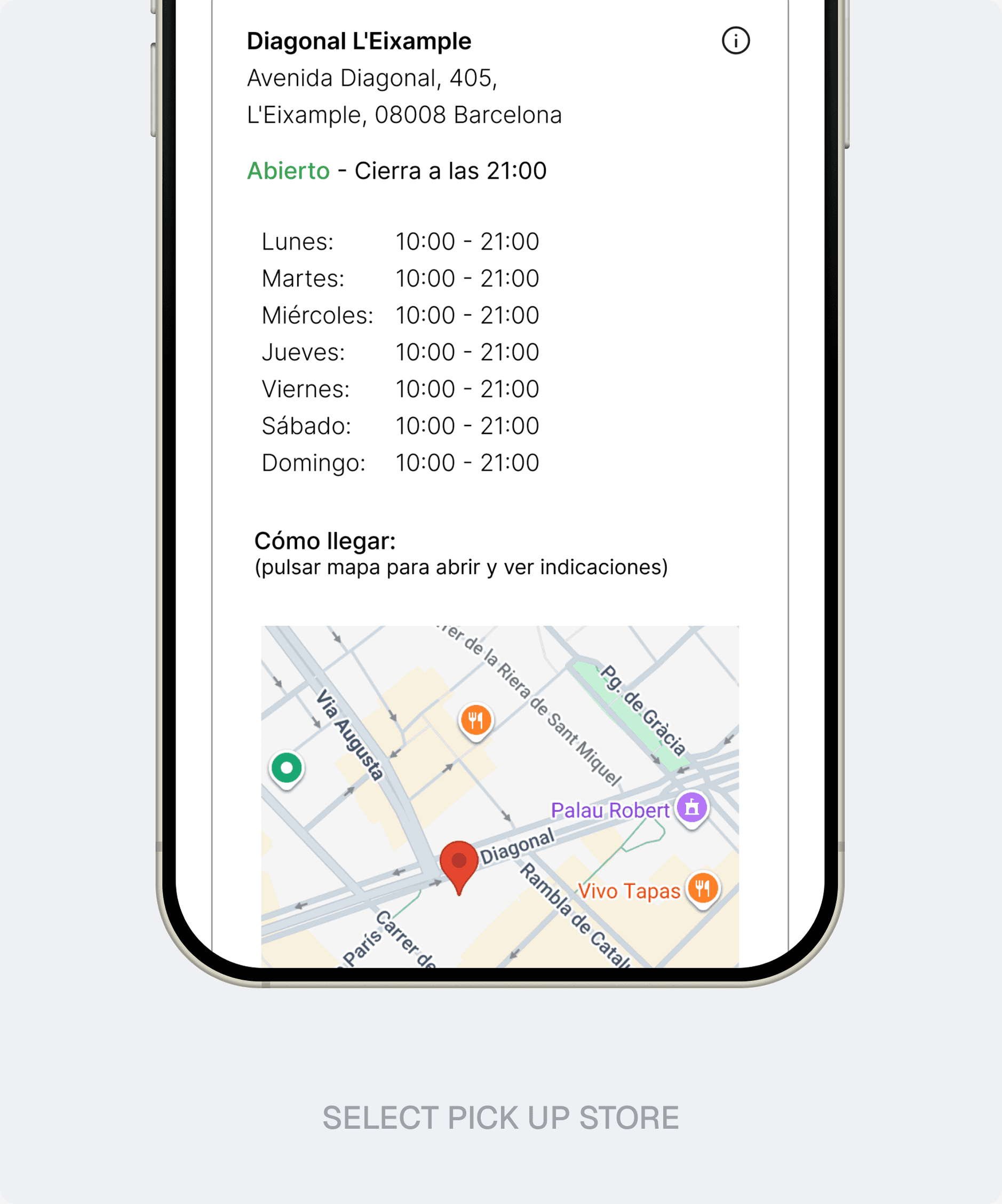
→ Store-based activation.
For location-specific confidence.
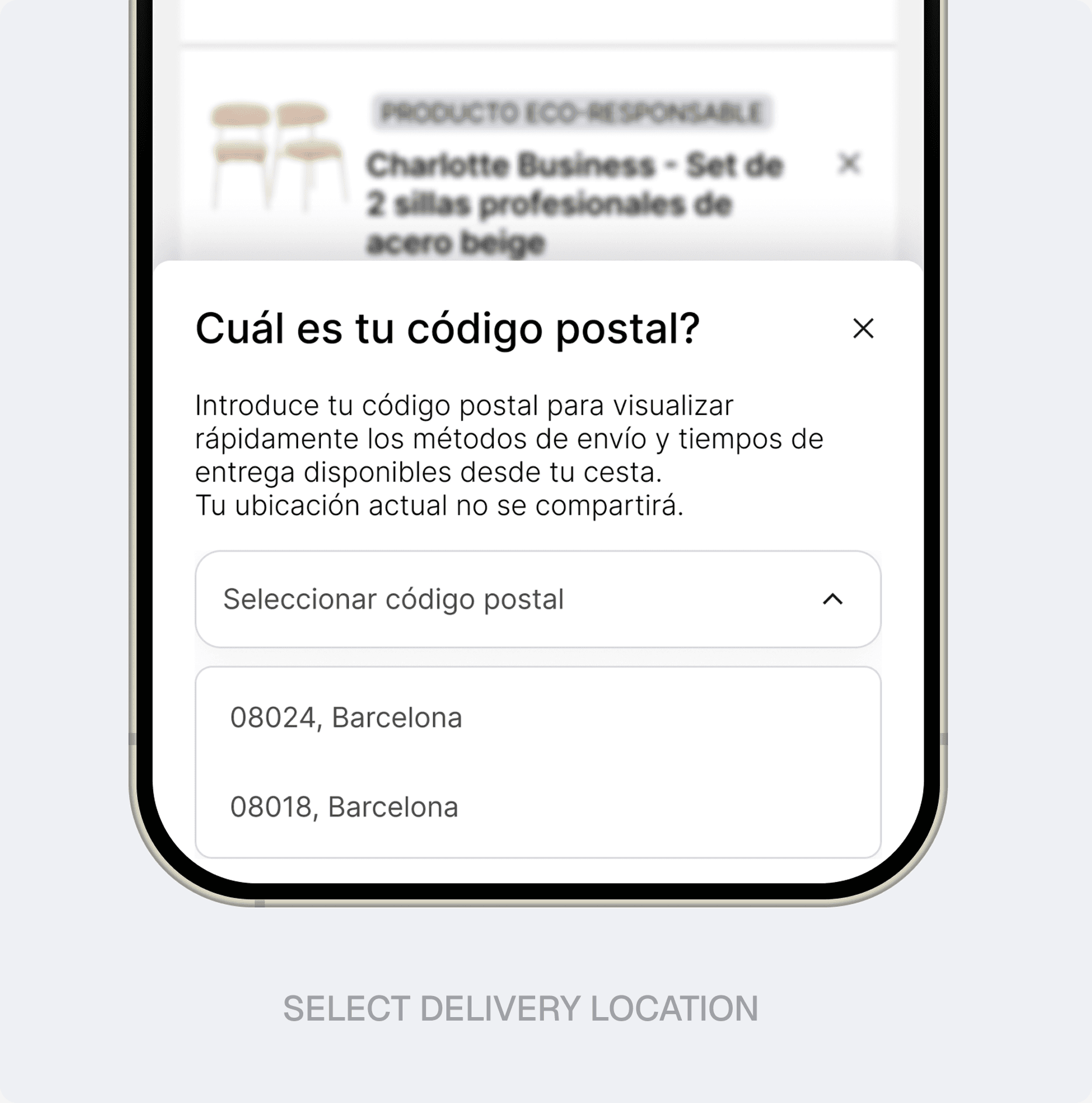
Faster early feasibility without full address commitment.
Users can confirm delivery feasibility before investing in a full checkout flow by a lightweight ZIP code selection. This reduces cognitive effort and prevents restart loops.

Location flexibility that updates without breaking momentum.
Users can modify their ZIP code at any time, and the cart instantly refreshes cost, availability, and delivery timing—preserving progress without requiring a restart.
Validation focus.
The prototype was evaluated against three decision-critical factors influencing cart completion:
→ Clarity
Immediate comprehension of shipping cost and delivery timing
→ Effort level
Low cognitive load and efficient task completion without abandoning.
→ Buying intent
Confident progression toward the primary CTA.
What users said, and what they did?
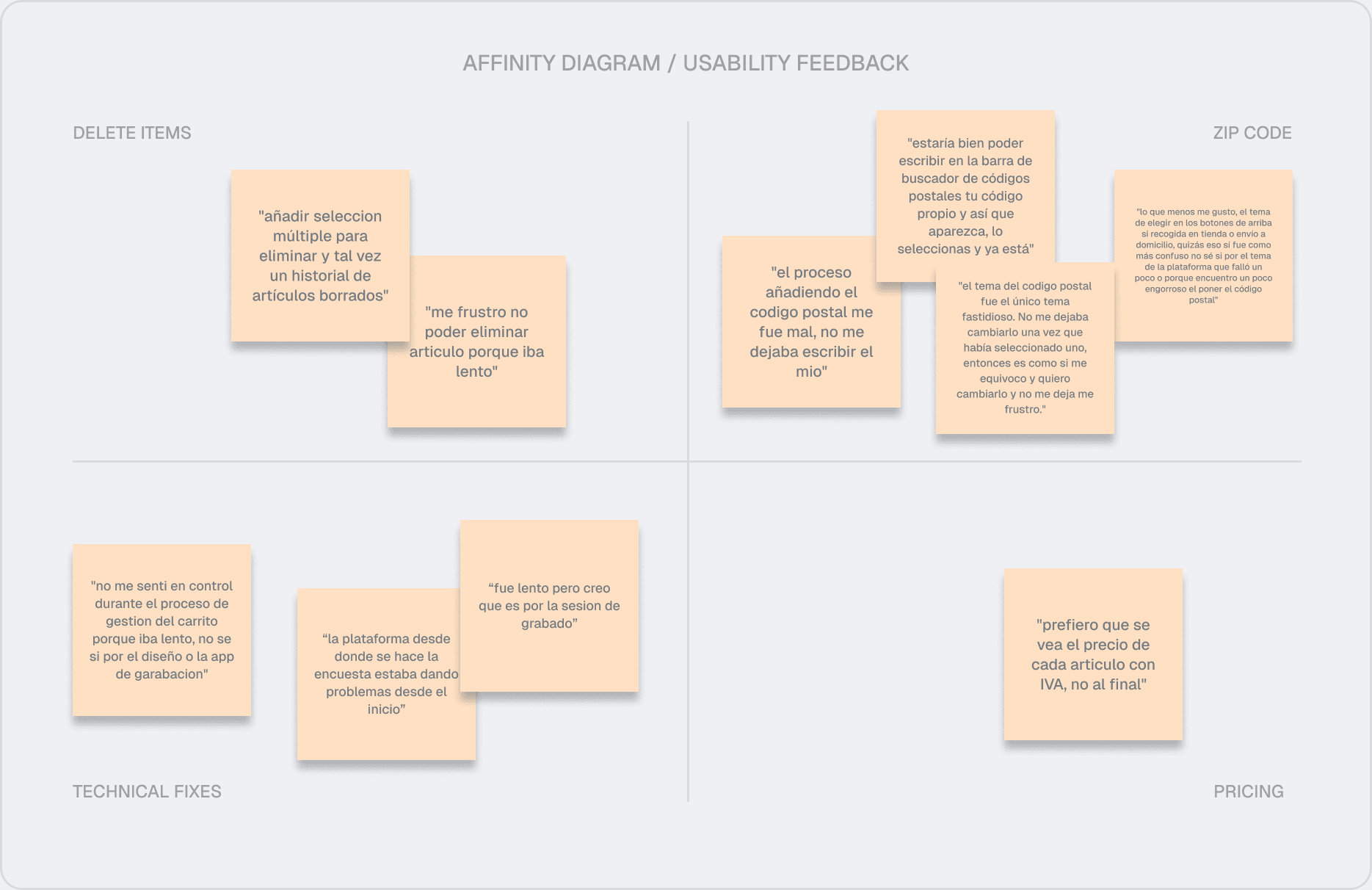
Based on affinity diagram with user feedback clustering, I found that zip code and technical issues were the dominant friction points users faced during the usability testing.
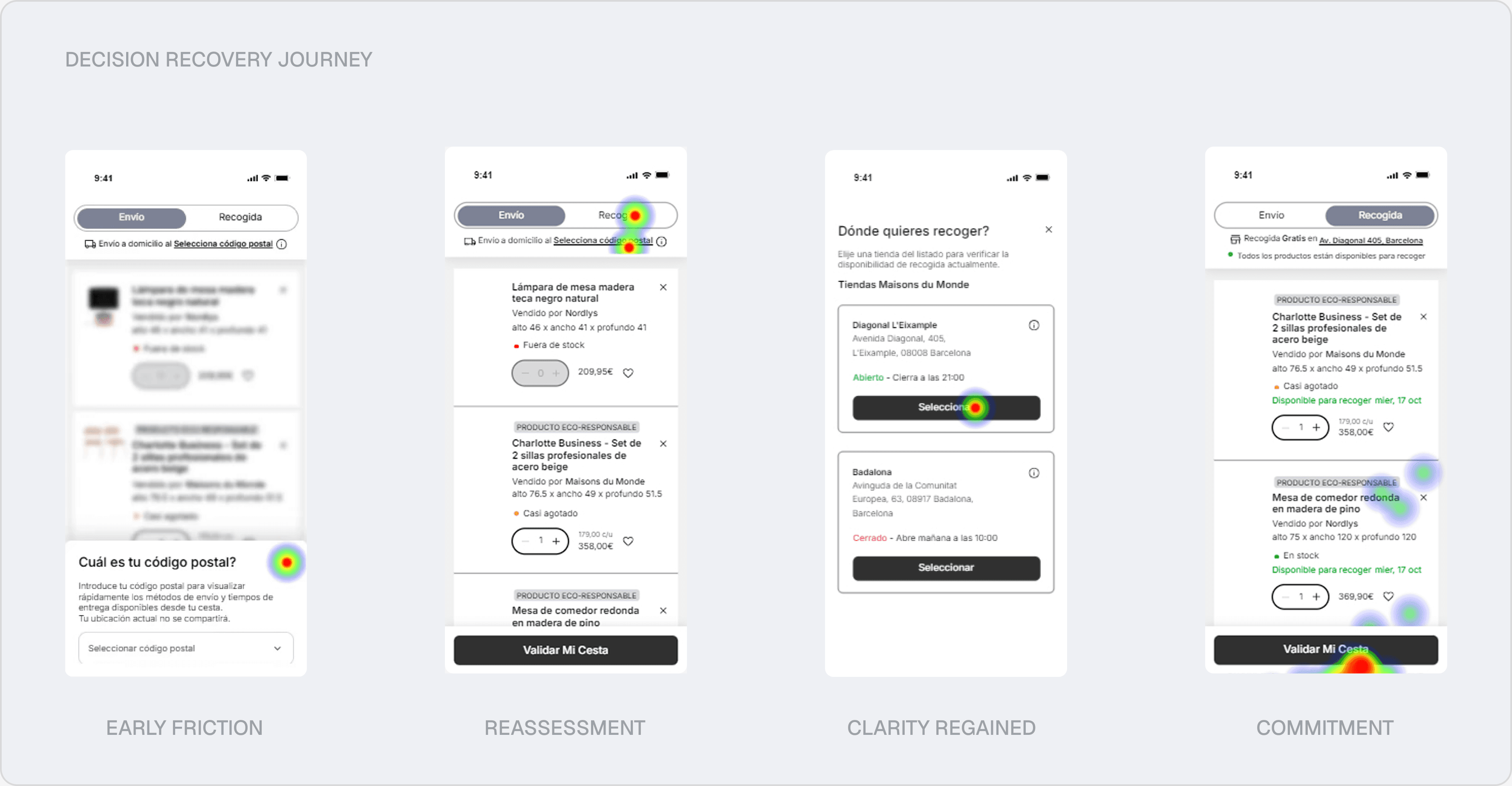
Heatmap evidence revealed a consistent behavioral progression: early friction at ZIP selection, modality reassessment, clarity anchored by store selection, and final CTA commitment.
By converging usability feedback + interaction heatmaps, three aligned insights emerged.
Insight 1 — The zip code limitation was an expectation-control mismatch triggered early friction.
Users expected to type their ZIP code directly and expressed confusion when limited to selection from a list, then heatmaps show repeated interaction attempts around the ZIP selection area before shifting attention.
Insight 2 — When uncertainty appeared, users sought control rather than exiting the flow.
Participants said that considered pickup as an alternative when delivery expectations failed, and Interaction intensity moved from closing ZIP code section to pickup toggle and store selection.
Insight 3 — Users differentiated testing tool performance issues from structural prototype logic, preserving trust in the decision model.
Some frustration was related to latency during testing, observed by repeated interaction attempts occurred, but users maintained decision flow, so that meant technical friction was isolated from UX logic.
Impact
Shipping transparency transformed the cart into a decision stabilizer — increasing user confidence and progression willingness toward checkout.
From a business perspective, increasing cart-stage completion directly reduces drop-off risk and protects potential revenue at scale.
Key metrics.
60% task success rate — cart completion
Baseline: ≥70%
The completion rate did not fully meet the success criterion. Observations suggest that slow testing tool performance and friction in selecting the delivery method contributed to user frustration, influencing drop-off among some participants.
176.6 s avg. time on task — shipping decision-making
Baseline: <2 minutes
The metric was slightly above the defined threshold. Tool latency during testing likely increased decision time. Additionally, at this early validation stage, the design intentionally prioritized clarity and decision confidence over speed — which could reasonably extend evaluation time.
Retrospective
Strategic takeaways.
Control is as critical as clarity in shipping decision-making.
Clarity alone is not enough. Users also need a sense of control when selecting delivery options. Design for both is essential to maintain momentum in the cart.
Design decisions must scale for both users and business.
Shipping transparency is not just a UX improvement — it must operate within operational constraints, pricing logic, and fulfillment models, ensuring clarity does not compromise feasibility.
Early-stage validation is directional, not conclusive.
The MVP supported smoother progression but did not fully meet the expectations. Further iteration and A/B testing are required to provide statistical certainty and validate impact at scale.
Micro-frictions create macro impact, even though they are underestimated.
Small uncertainties — such as unclear delivery methods — in high-traffic environments, even minor friction can produce cart drop-offs and scale into measurable revenue leakage.